Blog
#1 Best Resource For Chimney Cowls (2025) — UK Hub


The UK Chimney Cowl Resource Hub
Find the right chimney cowl by starting with the problem, not the product. Compare anti-downdraught cowls, spinning cowls, rain caps, bird guards, spark arrestors, chimney cappers and flexible-liner terminals. Then check the chimney pot, fuel, appliance, flue, fixing method, materials and exposure before ordering.
This authority hub brings together the complete Chimney Cowls UK guide series: product selection, sizing, installation, maintenance, roof access, coastal exposure, open fires, wood-burning stoves, flexible liners, chimney rain, downdraught, condensation and common buying mistakes.
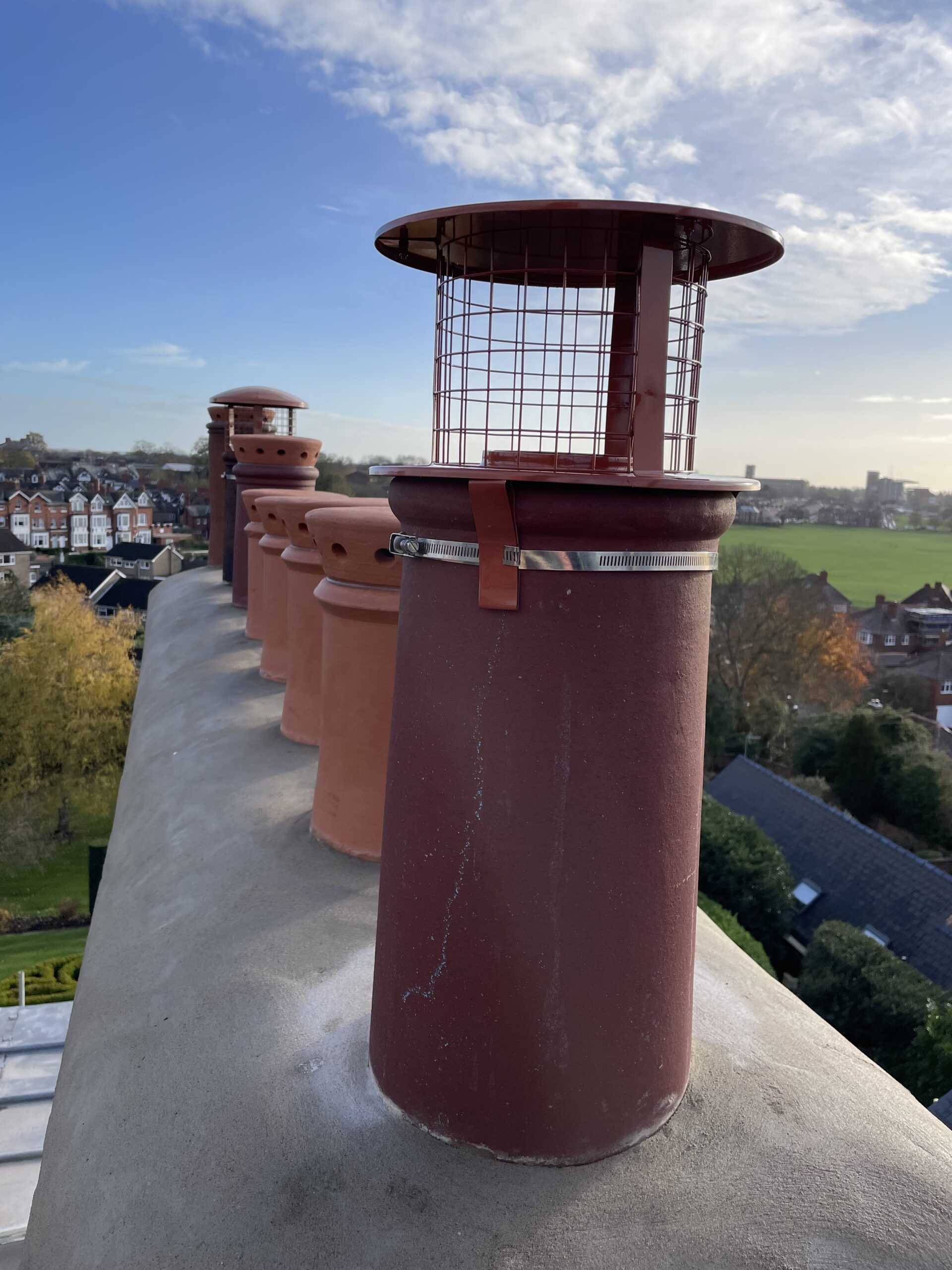
Which Chimney Cowl Do I Need?
Choose a chimney cowl according to the problem being addressed. Consider an anti-downdraught chimney cowl for diagnosed wind-related smoke blowback; a rain cap for direct rain entry; an appliance-compatible bird guard for nesting and debris; a correctly specified flexible-liner cowl for a lined stove; or a ventilating chimney capper for a redundant flue.
A spinning cowl, spark arrestor, H-cowl or specialist terminal should only be selected after confirming that its construction, outlet area and fuel suitability match the appliance and flue. A chimney cowl is not a universal cure for every chimney problem.
Everything You Need to Choose a Chimney Cowl
Chimney cowls are frequently sold as simple roof accessories, but their effect on a chimney can be significant. A well-chosen cowl can reduce direct rain, discourage birds, support a flexible liner or improve performance in particular wind conditions. An unsuitable cowl can restrict the outlet, collect deposits, rattle in severe weather or fail to solve the original defect.
The correct selection starts below the chimney pot. Identify the connected appliance, fuel and flue arrangement. Establish whether the chimney serves an open fire, wood-burning stove, multi-fuel stove, gas appliance, oil appliance or no appliance at all. Then diagnose the symptom and inspect the chimney before selecting a terminal.
Use this page as the main index for the wider Chimney Cowls UK knowledge base, or begin with our complete guide to chimney cowls .
Choose a Chimney Cowl by the Problem
A chimney cowl should have a clear purpose. Do not begin by asking which cowl looks best or which product is most expensive. Begin by establishing what is happening at the chimney and whether the terminal is genuinely part of the solution.
Smoke Blows Back in Wind
Investigate wind-related downdraught, chimney height, surrounding buildings, room ventilation, blockage and flue condition. Where adverse wind pressure is confirmed, compare a suitable static anti-downdraught cowl.
Diagnose chimney downdraughtRain Enters the Chimney
A rain cap can reduce direct rainfall, but the chimney stack, flaunching, pointing, flashings and condensation risk should also be checked before attributing all dampness to the open pot.
Compare rain-cap cowlsBirds or Debris Enter the Flue
Select a bird guard compatible with the fuel and appliance. The mesh must provide adequate ventilation and remain accessible for inspection and cleaning.
Read the bird-guard guideA Flexible Liner Needs Terminating
Match the cowl or pot-hanger to the actual flexible-liner diameter and the chimney-pot arrangement. Do not rely on the appliance outlet size alone.
Choose a flexible-liner cowlThere Is an Ember or Thatch Risk
Spark-control measures require specialist consideration. Fine mesh can collect soot, tar and deposits, increasing maintenance demands and potentially reducing effective outlet area.
Read the spark-guard guideThe Flue Is Redundant
Use a ventilating chimney capper or suitable terminal that reduces rain and debris entry while allowing the unused flue to breathe. Avoid sealing a masonry chimney completely at both ends.
Browse chimney cappers
Chimney Cowls Perform Different Jobs
A static anti-downdraught cowl, rotary cowl, rain cap and bird guard may all fit a similar chimney pot, but they do not perform the same function. The terminal should be selected according to the diagnosed chimney problem rather than appearance alone.
Compare the cowl head, outlet clearance, mesh arrangement, material, fixing method, declared fuel suitability and ongoing maintenance demands. A product that physically fits the outside of the chimney pot is not automatically suitable for the connected appliance.
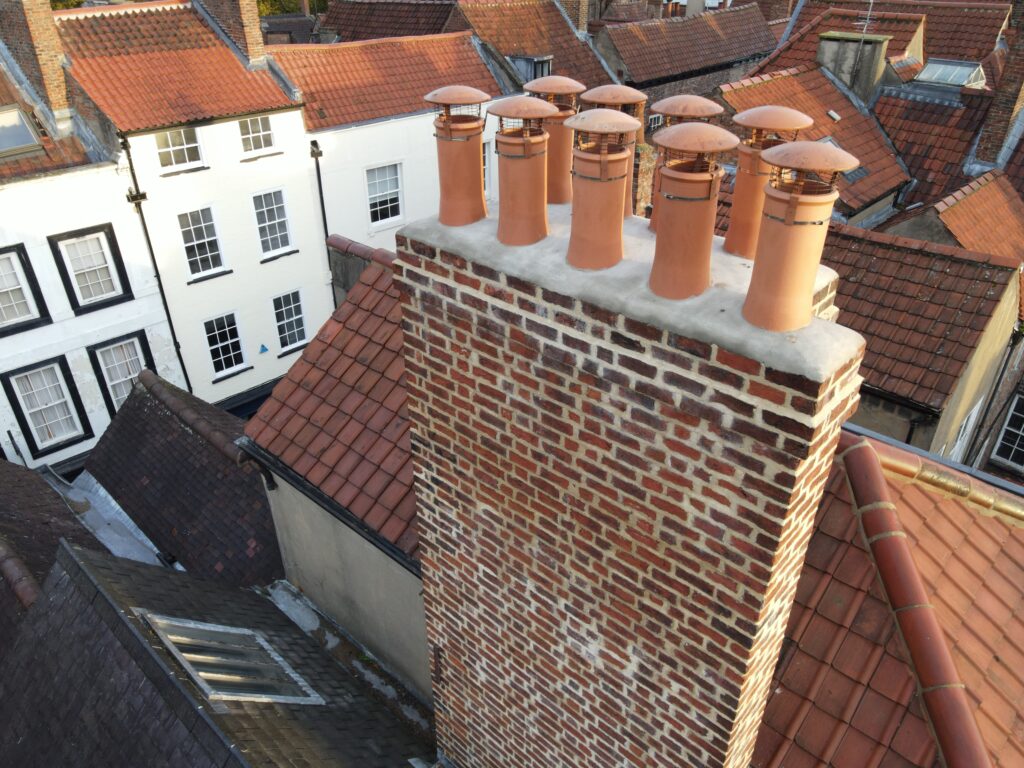
Compare Chimney CowlsA correctly fitted terminal should sit securely on a sound chimney pot without restricting the effective flue outlet.
Compare the Main Types of Chimney Cowl
| Cowl type | Main purpose | Advantages | Important limitations |
|---|---|---|---|
| Static anti-downdraught cowl | Reduce the effects of adverse wind pressure | No bearings or rotating parts; suitable models available for solid fuel | Will not correct blockage, poor ventilation or an unsuitable flue |
| Spinning or rotary cowl | Use wind movement to create a pressure effect at the outlet | Can be useful at selected exposed sites with changing wind direction | Bearings and moving parts require inspection; not automatically better than a static cowl |
| Rain-cap cowl | Reduce direct rainfall entering the flue | Simple design with no moving parts | Must retain adequate outlet clearance and will not repair defective flashings or masonry |
| Bird-guard cowl | Discourage birds, nests, leaves and larger debris | Provides a physical barrier around the outlet | Mesh can accumulate soot and debris and must suit the appliance and fuel |
| Spark arrestor or spark guard | Reduce the passage of larger burning particles | May form part of a risk-control strategy for sensitive roofs | Fine mesh can block rapidly and requires strict inspection and cleaning |
| Flexible-liner cowl | Terminate and weather a flexible flue liner | Purpose-designed connection to a defined liner diameter | Incorrect liner sizing or support arrangement can compromise the installation |
| Pot-hanger cowl | Support a compatible liner from the chimney pot | Combines liner support, weathering and terminal functions | Must fit both the chimney pot and liner correctly |
| Chimney capper | Weather-protect and ventilate a redundant chimney | Reduces direct rain and debris entry while retaining airflow | Not generally intended as the terminal for an active solid-fuel appliance |
| H-cowl or multi-flue terminal | Address particular pressure conditions or multi-flue arrangements | Can provide a specialist response to complex chimney-stack conditions | Requires careful sizing, spacing and fuel assessment |
Choose a Chimney Cowl by Appliance and Fuel
Fuel suitability is as important as physical size. A terminal designed for a redundant chimney, ventilation duct or particular gas appliance should not be assumed suitable for an open fire or wood-burning stove.
Wood-Burning Stoves
Confirm whether the stove connects to a flexible liner, clay liner, masonry chimney or manufactured flue. Choose a terminal suitable for solid fuel and preserve an adequate outlet.
Best cowl for a wood-burning stoveOpen Fires
Open fires move large volumes of air. Avoid terminals with unnecessarily restrictive mesh, narrow gaps or insufficient free outlet area.
Chimney cowls for open firesMulti-Fuel Stoves
Select a cowl declared suitable for the fuels being burned and the flue temperature. Deposits can accumulate on guards and moving parts.
Gas Appliances
Gas appliances require approved terminal arrangements appropriate to the appliance. Changes should be assessed by an appropriately qualified Gas Safe registered engineer.
Oil Appliances
Follow the appliance and flue-system manufacturer’s instructions. Terminal material, diameter and resistance to condensate require specific consideration.
Redundant Chimneys
Retain ventilation through disused masonry flues. Use a compatible chimney capper rather than an improvised solid cover.
Browse chimney cappers
Record More Than One Chimney-Pot Diameter
A reliable measurement record includes the upper outside diameter, clear internal opening, overall pot height, body profile and the available straight-sided fixing area.
Decorative rolls, lips and shoulders may be wider than the section on which a strap or band must sit. Where the pot is oval or irregular, record both axes. Where a flexible liner is present, establish its actual diameter independently of the chimney-pot dimensions.
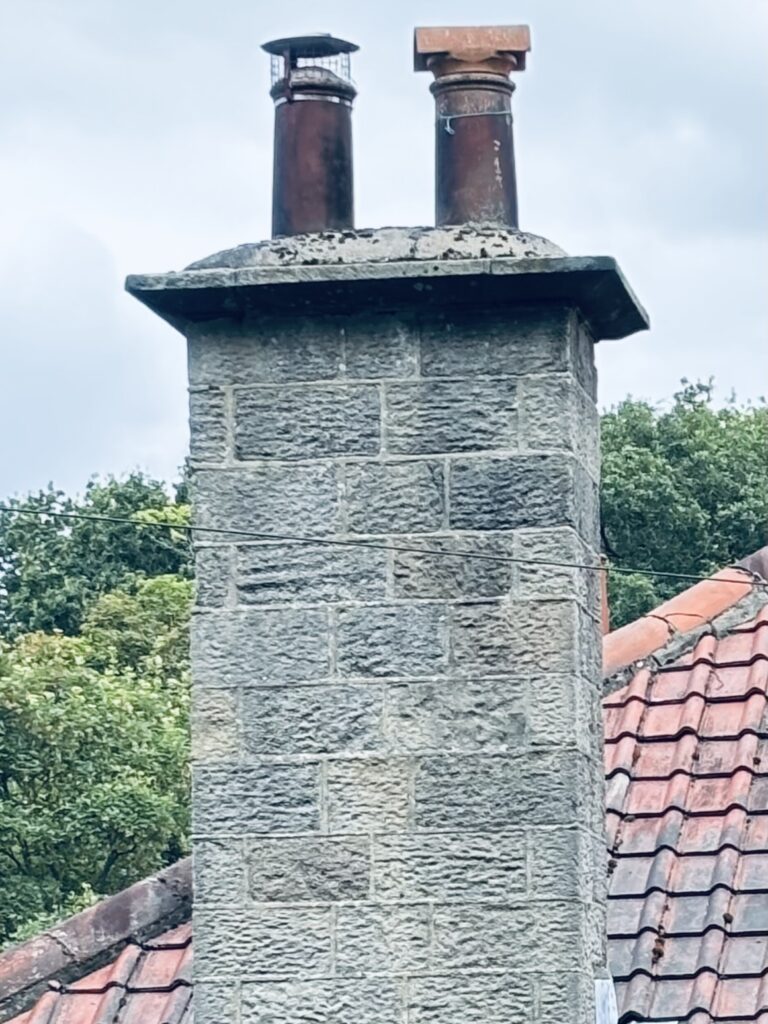
Read the Chimney Cowl Size GuideExisting pots should also be checked for cracking, spalling, movement, defective flaunching and previous fixing damage.
How to Measure a Chimney Pot for a Cowl
Identify the Pot Shape
Record whether the pot is round, oval, square, tapered, roll-top, bishop, cannon, beehive or another decorative profile.
Measure the Upper Outside Diameter
Measure across the external body where the fixing will sit. Do not rely solely on the widest decorative lip or roll.
Measure the Clear Internal Opening
The internal opening affects inserts, liners and the available path for combustion gases. It will be smaller than the outside diameter.
Measure the Straight Fixing Height
Determine whether there is enough parallel-sided clay for a strap or band to grip without sitting over a curved shoulder or damaged rim.
Confirm the Liner Diameter
For a lined chimney, confirm the actual liner size independently. Common liner sizes do not mean that every installation uses the same terminal.
Inspect the Pot Before Fixing
Check for cracking, frost damage, spalling, leaning, previous drilled holes and failed flaunching. Do not clamp a new cowl to defective clay.
Chimney Cowl Sizing and Outlet Area
Correct sizing involves more than choosing a strap that closes around the pot. The cowl must remain compatible with the flue and maintain a suitable route for the discharge of combustion products.
Pot-Fitting Range
Check that the manufacturer’s stated fixing range includes the measured pot diameter with adequate adjustment remaining.
Liner Diameter
Flexible-liner cowls, inserts and pot-hangers must match the actual liner diameter and connection arrangement.
Outlet Clearance
The opening beneath a cap and through any mesh should not unnecessarily restrict the flue outlet.
Neighbouring Flues
Large cowls and H-terminals require sufficient clearance from adjacent pots on the same chimney stack.
Height and Exposure
Taller products create greater leverage at the fixing and may require a more robust arrangement at highly exposed sites.
Access for Cleaning
Mesh, caps, bearings and liner connections should remain inspectable after installation.
Strap, Plate or Pot-Hanger?
A strap or band can suit a sound, appropriately shaped clay chimney pot. A bolt-down plate may be appropriate where the specification and chimney-top construction require a mechanically fixed base. A pot-hanger is used for compatible flexible-liner terminations.
The fixing should suit the chimney pot, liner, product instructions and environmental exposure. It should not be selected merely because it appears easiest to install.
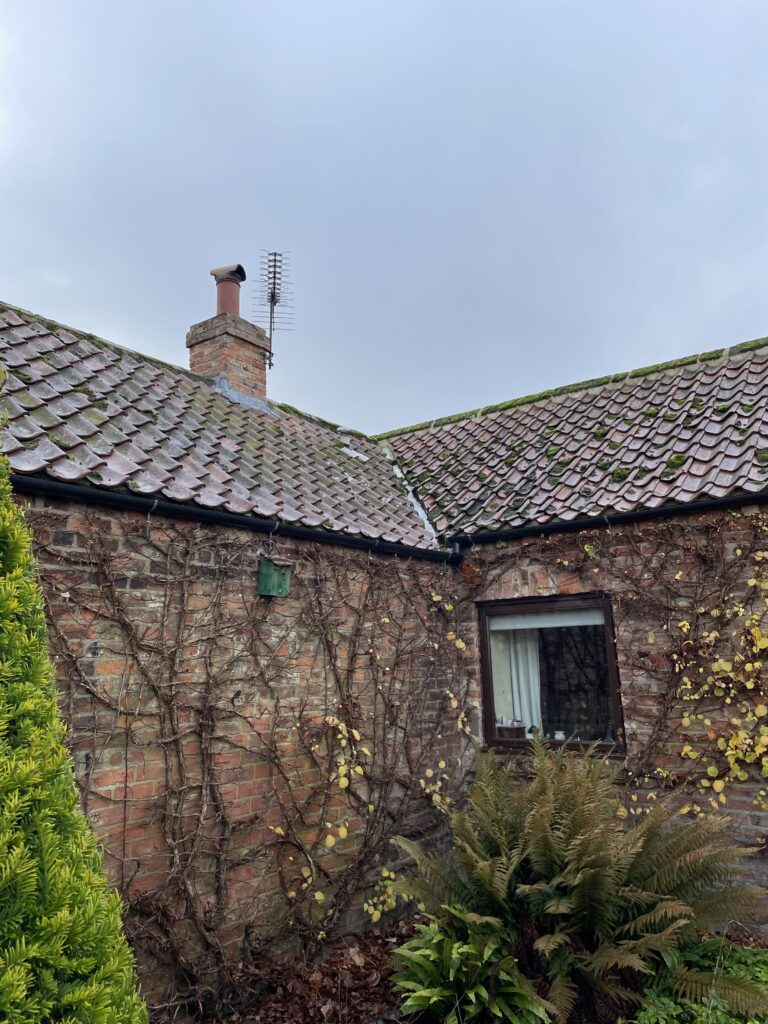
Compare Chimney Cowl FixingsBands should sit on sound, straight-sided clay and should never be overtightened around a cracked or deteriorated chimney pot.
Chimney Cowl Fixings Explained
| Fixing method | Common application | Advantages | Checks before installation |
|---|---|---|---|
| Strap and band | Sound round or compatible clay chimney pots | Reversible, relatively quick and avoids drilling the pot | Pot condition, diameter, straight fixing area and band seating |
| Bolt-down plate | Specified chimney-top, slab or flaunching arrangements | Positive mechanical fixing where correctly designed and installed | Substrate strength, level seating, fixings, sealing and outlet alignment |
| Pot-hanger | Flexible-liner termination through a suitable chimney pot | Can support the liner and provide terminal weathering | Pot diameter, liner diameter, support method and weight |
| Push-in insert | Compatible chimney-pot or liner openings | Compact connection for purpose-designed products | Internal diameter, insertion depth, retention and fuel suitability |
| Proprietary adaptor | Manufactured flue and specialist transition details | System-specific connection and declared compatibility | Exact system reference and manufacturer’s installation requirements |
Chimney Cowl Materials and Exposure
Material choice should reflect the fuel, external exposure, expected maintenance and desired service life. The cheapest material may not provide the best whole-life value at a coastal or highly exposed location.
| Material or finish | Typical strength | Best suited to | Maintenance considerations |
|---|---|---|---|
| Stainless steel | Good corrosion resistance and durable external finish | Exposed, coastal and long-term installations | Rinse salt deposits, clean mesh and inspect straps or fixings |
| Galvanised steel | Cost-effective protection for many inland locations | General domestic use where exposure is moderate | Inspect scratches, corrosion, mesh and fixings periodically |
| Powder-coated metal | Discreet coloured appearance | Visible rooflines and selected heritage settings | Check chips, abrasion and under-film corrosion |
| Clay terminal | Traditional appearance and compatibility with clay pots | Architectural and heritage applications | Inspect for cracking, frost damage and mortar deterioration |
| Aluminium components | Lightweight and corrosion resistant in suitable uses | Specific proprietary terminals and systems | Check temperature and fuel suitability before use |
Materials and Finishes Guide
Compare stainless, galvanised and powder-coated options by exposure, maintenance and cost.
Read the guideCoastal Chimney Cowls
Select materials, heads and fixings for salt-air, storms and variable high-wind conditions.
View coastal guidanceCowls for Bungalows
Understand low-ridge turbulence, roof eddies, rain protection and fixing considerations.
Read the bungalow guideChimney Cowl Installation Process
Diagnose the Chimney Problem
Establish why a terminal is proposed and rule out blockage, damaged masonry, inadequate ventilation and flue defects.
Confirm Appliance and Fuel
Check that the intended cowl is declared suitable for the connected appliance, fuel and operating temperature.
Measure the Pot and Flue
Record the chimney-pot dimensions, profile, clear opening and any flexible liner diameter.
Inspect the Chimney Top
Check the chimney pot, flaunching, pointing, masonry, liners and neighbouring terminals before attaching the new product.
Provide Safe Access
Use an appropriate scaffold, platform, MEWP or other properly planned access method suitable for the building and work.
Dry-Fit the Cowl
Confirm the product sits level, clears adjacent pots, preserves the outlet and provides enough room for secure fixing.
Secure the Product Evenly
Follow the product instructions. Seat bands on sound straight clay and tighten fixings evenly without distorting the terminal or cracking the pot.
Inspect, Test and Record
Confirm the installation is stable, unobstructed and correctly aligned. Record the product, dimensions and photographs for future maintenance.

Plan for Inspection and Maintenance
Chimney-cowl meshes, caps, straps, bearings and liner connections remain exposed to wind, rain, combustion deposits and temperature changes. They should be checked during routine chimney servicing and after significant storms.
Products containing fine mesh or moving components may require more frequent cleaning than a simple static terminal. Inspection should also include the chimney pot, flaunching, pointing and surrounding masonry.
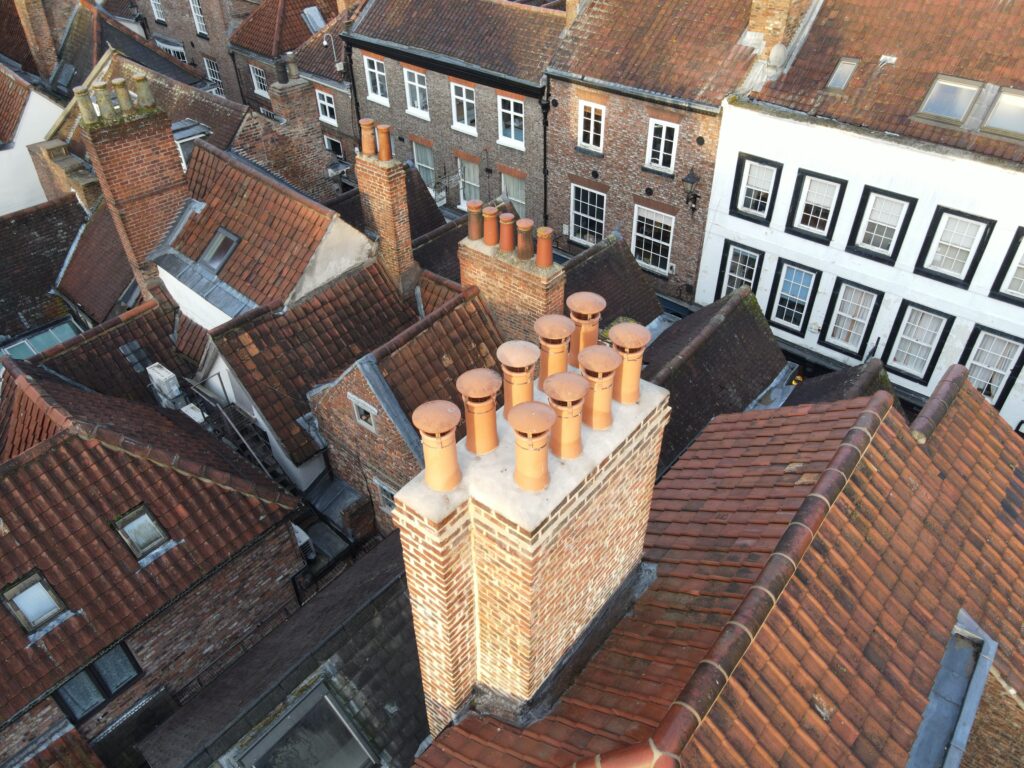
Read the Chimney Cowl Maintenance GuideClose-range roof access provides an opportunity to photograph the terminal, pot, fixings and chimney-top weathering for future comparison.
Chimney Cowl Maintenance and Cleaning
Chimney cowls are not maintenance-free. The frequency of inspection depends on the fuel, appliance, chimney use, mesh size, surrounding trees, bird activity, exposure and product design.
Mesh Guards
Remove soot, tar, leaves, feathers and nesting debris before the effective opening becomes restricted.
Rotary Cowls
Check bearings, free movement, noise, imbalance and accumulated deposits. Do not assume rotation confirms good condition.
Straps and Fixings
Inspect for loosening, corrosion, distortion and movement, particularly after storms and repeated heating cycles.
Chimney Pot
Look for cracks, frost damage, leaning, failed flaunching and damage caused by previous fixings.
Chimney Cowl Troubleshooting
| Symptom | Possible cause | Recommended next step |
|---|---|---|
| Smoke blows back in gusts | Wind pressure, roof turbulence, inadequate height, obstruction or poor ventilation | Complete a downdraught assessment |
| Smoke spills in all weather | Blockage, cold chimney, restricted cowl, appliance issue or inadequate air supply | Stop using the appliance until the flue and room ventilation are checked |
| Rain smell after storms | Open terminal, shallow rain protection, flaunching, pointing or flashing defect | Diagnose the source of rain ingress |
| Cowl rattles or hums | Loose fixing, poor seating, thin material, resonance or damaged pot | Arrange close inspection and do not simply tighten against cracked clay |
| Spinning cowl stops moving | Deposits, worn bearing, corrosion, impact or imbalance | Clean and inspect the mechanism; replace defective components |
| Soot accumulates on mesh | Fine mesh, poor combustion, wet fuel, low flue temperature or infrequent sweeping | Clean the mesh and investigate combustion and chimney conditions |
| Water remains despite a rain cap | Chimney masonry, flashing, flaunching or condensation rather than direct rainfall | Investigate condensation and building defects |
| Birds return around the guard | Damaged mesh, large openings, nesting beside the terminal or an unsuitable product | Inspect the complete terminal and follow wildlife legislation |
Essential Chimney Cowl Guides
The Ultimate Guide to Chimney Cowls
Understand why cowls are used, the main product types and how to choose a suitable terminal.
Read the complete guide → DiagnosisDo I Need a Chimney Cowl?
Decide whether the chimney needs a cowl, repair, sweep, liner assessment or another intervention.
Assess your chimney → Buying guideTen Common Buying Mistakes
Avoid incorrect sizing, fuel incompatibility, weak fixings and unnecessary outlet restriction.
Avoid ordering errors →Guides by Chimney Cowl Type
Anti-Downdraught Cowls
Understand static designs, wind pressure and when a downdraught cowl may help.
Read the guide → RotarySpinning Chimney Cowls
Compare rotary performance, exposed sites, sizing, bearings and maintenance.
Read the guide → RainRain-Cap Chimney Cowls
Reduce direct rainfall while maintaining adequate outlet clearance.
Read the guide → BirdsBird-Guard Chimney Cowls
Compare mesh, appliance compatibility, cleaning and nesting prevention.
Read the guide → EmbersSpark-Guard Chimney Cowls
Understand spark-control applications and the maintenance burden of fine mesh.
Read the guide → TerminologyChimney Caps versus Cowls
Distinguish active-flue terminals from products for redundant chimneys.
Compare the options →Sizing, Fixings, Liners and Materials
Chimney Cowl Size Guide
Measure pots, openings, fixing areas and flexible liners before ordering.
Measure correctly → CalculatorChimney Cowl Sizing Calculator
Use measurements and worked examples to assess potential product compatibility.
Use the calculator → FixingsStrap, Bolt and Pot-Hanger Fixings
Compare band-fixed, plate-fixed and flexible-liner support arrangements.
Compare fixings → LinersCowls for Flexible Flue Liners
Choose the correct liner diameter, support method and weathering detail.
Read the liner guide → MaterialsMaterials and Finishes
Compare stainless, galvanised and coated cowls for different environments.
Compare materials → ExposureCoastal and High-Wind Sites
Select durable materials and suitable head geometry for exposed properties.
Read coastal guidance →Guides by Chimney and Property Type
Wood-Burning Stove Cowls
Compare wind, rain, bird and liner-terminal options for wood-burning stoves.
Read the stove guide → Open firesCowls for Open Fires
Protect adequate outlet area and avoid unnecessarily restrictive terminals.
Read the open-fire guide → BungalowsCowls for Low-Ridge Roofs
Understand turbulence, rain and noise around lower chimney outlets.
Read the bungalow guide → Multi-flueH-Cowls and Multi-Flue Terminals
Consider clearance, pressure interaction and complex chimney-stack layouts.
Read the multi-flue guide → Chimney potsChimneypots for Sale
Compare new, decorative, replacement and reclaimed chimney pots.
Browse chimney pots → Product rangeNew Chimney Pots
Source clay pots and compatible chimney terminals for UK delivery.
View chimney pots →Diagnosis, Installation and Upkeep
Chimney Downdraught Solutions
Investigate wind pressure, ventilation, height, blockage and flue condition.
Diagnose downdraught → Water entryChimney Rain Ingress
Separate terminal rain entry from masonry, flashing and flaunching defects.
Diagnose rain ingress → CondensationChimney Condensation Problems
Understand cold flues, vapour, moisture and staining that a rain cap may not solve.
Read the condensation guide → InstallationInstall a Chimney Cowl
Follow the assessment, access, fitting, alignment and testing process.
Read the installation guide → MistakesInstallation Mistakes
Avoid cracked pots, poor fixings, restricted outlets and unstable cowls.
Avoid installation errors → MaintenanceCleaning Meshes, Caps and Bearings
Maintain clear airflow, secure fixings and quiet moving components.
Read the maintenance guide →Common Chimney Cowl Selection Mistakes
Choosing Before Diagnosing
Buying an anti-downdraught cowl for smoke caused by a blockage or inadequate room ventilation will not address the underlying problem.
Measuring Only the Widest Rim
A decorative roll or lip may not be the location where the strap must sit. Measure the actual fixing area.
Ignoring Fuel Suitability
A product that fits the pot may still be unsuitable for solid fuel, gas, oil or the expected operating temperature.
Restricting the Outlet
Tight cap clearances and blocked mesh can impair discharge and increase the risk of poor performance.
Fixing to Cracked Clay
Tightening a band around a damaged pot can worsen the defect and leave the complete terminal insecure.
Ignoring Future Maintenance
Fine mesh, bearings and inaccessible fixings can create an ongoing service burden that should be considered before purchase.
Chimney Cowl Buyer’s Checklist
Before Ordering
- Identify the appliance and fuel.
- Establish whether the chimney is lined.
- Confirm the problem being addressed.
- Measure the pot and liner independently.
- Check the straight fixing area.
- Inspect the chimney-pot condition.
- Check product fuel suitability.
- Consider coastal or high-wind exposure.
- Confirm delivery and return conditions.
Before Installation
- Provide an appropriate working platform.
- Inspect the pot, flaunching and stack.
- Dry-fit the complete terminal.
- Check neighbouring-flue clearance.
- Confirm the outlet remains unobstructed.
- Follow the fixing instructions.
- Avoid overtightening against clay.
- Photograph the finished installation.
- Set a future inspection routine.
Find and Buy a Suitable Chimney Cowl
Compare cowls for wind, rain, birds, flexible liners and redundant chimney flues. Check the appliance, fuel, pot size, liner diameter and fixing arrangement before placing the order.
When to Ask a Chimney Professional
Seek competent assistance where the problem involves smoke entering the room, repeated downdraught, an unknown or blocked flue, a gas or oil appliance, a cracked chimney pot, damaged masonry, unsafe roof access or uncertainty about fuel suitability.
- Arrange sweeping and an internal flue inspection where blockage is possible.
- Use a Gas Safe registered engineer for gas-flue and gas-terminal work.
- Follow the appliance manufacturer’s requirements for oil systems.
- Use suitable roof access and competent installation at chimney level.
- Repair cracked pots and defective flaunching before attaching a cowl.
Chimney Cowl Frequently Asked Questions
What is the best chimney cowl?
There is no single chimney cowl that is best for every property. The correct choice depends on the appliance, fuel, flue, chimney-pot dimensions, fixing method, exposure and the particular problem being addressed.
Which chimney cowl should I use for downdraught?
Where wind-related downdraught has been properly diagnosed, compare a suitable static anti-downdraught cowl. First check for blockage, inadequate ventilation, insufficient chimney height and flue defects.
Will a spinning chimney cowl improve draw?
A spinning cowl may assist in selected exposed conditions, but it is not a universal solution. Moving parts require maintenance and the underlying chimney conditions must still be assessed.
Will a rain cap stop all chimney leaks?
No. A rain cap can reduce direct rainfall entering the flue, but water may also enter through defective flaunching, pointing, flashings or masonry. Condensation can produce similar internal symptoms.
Can I fit a bird guard to a wood-burning stove?
Only use a bird guard declared suitable for the appliance and fuel. The mesh must provide adequate outlet area and be inspected and cleaned regularly.
What chimney cowl do I need for a flexible liner?
Select a flexible-liner cowl or pot-hanger compatible with the actual liner diameter, chimney-pot dimensions and support arrangement.
Are chimney cowls a standard size?
No. Chimney cowls have stated pot-fitting ranges, liner sizes, plate dimensions and outlet arrangements. Measure the installation before ordering.
Can I fit a chimney cowl to a cracked pot?
A cracked, spalled or unstable chimney pot should be repaired or replaced before a strapped or clamped cowl is installed.
How often should a chimney cowl be inspected?
Inspect the cowl during routine chimney sweeping and after severe weather. Mesh, spark guards and moving components may require more frequent attention where deposits accumulate.
Should an unused chimney be completely sealed?
A redundant masonry chimney should normally retain ventilation. Use a suitable ventilating chimney capper and consider low-level ventilation to the flue.
Can a chimney cowl cause poor draw?
Yes. An incorrectly sized or blocked terminal can restrict discharge. Tight cap clearances, fine contaminated mesh and unsuitable inserts can all affect chimney performance.
Which chimney cowl material is best near the coast?
Stainless-steel products are often selected for demanding coastal exposure, but the exact grade, construction, fixing and maintenance requirements should be checked for the site.
Can I install a chimney cowl myself?
Installation involves work at height and may affect an active combustion system. Use competent assistance where access, sizing, fuel suitability or chimney condition is uncertain.
Where can I buy chimney cowls in the UK?
Browse anti-downdraught, spinning, rain-cap, bird-guard, liner and other chimney cowls through Chimney Cowls UK .
Find the Right Chimney Cowl
Start with the chimney problem, confirm the appliance and fuel, measure the chimney pot or liner and select a compatible product and fixing arrangement.