Blog
Chimney Cowl Buying Mistakes UK (2025)


Chimney Cowl Buying Mistakes UK (2025)
Chimney Cowl Buying Mistakes UK is a straight-talking buyer’s guide built to save you time, money and frustration. We’ll show you how to avoid the classic traps: picking the wrong head for your problem, mis-sizing bands and plates, choking the free exit area, choosing the wrong material for coastal exposure, and skipping the post-storm checks that protect your investment.
Want professional help? Book nationwide sweeps & installers through The Stove Guys. Share this page—Chimney Cowl Buying Mistakes UK—to brief them fast.
In this page
- Why Chimney Cowl Buying Mistakes UK happen (and how to prevent them)
- Measure like a pro: pots, liners, exit area
- Match the head to the symptom
- Fixings that don’t fail: strap/band, bolt-down, pot-hanger
- Materials & finishes for UK weather
- Airflow & noise—protect the free exit area
- Buying bundles & avoiding false economy
- Pre-fit checks—buying with installation in mind
- Aftercare that protects your purchase
- Worked UK buying scenarios
- FAQs
- Conclusion & buying links
Why Chimney Cowl Buying Mistakes UK happen (and how to prevent them)
Most buyers start with a symptom—smoke, smells after rain, bird ingress, or rattling metal—and then grab the first “universal” cowl they see. That’s how Chimney Cowl Buying Mistakes UK begins. The right approach is symptom → measurement → head type → fixing → material → maintenance plan. Follow that chain and the cowl you buy will solve the problem for years, not weeks.
Another driver of Chimney Cowl Buying Mistakes UK is mixing up product language. A rain-cap is not an anti-downdraught. A bird-guard won’t cure wind puffing. And a spark-arrestor needs a cleaning routine to avoid whistle. This guide keeps the language simple and maps each head to its job.
Measure like a pro: pots, liners, exit area
Good buying starts with good measuring. If you only remember one thing from Chimney Cowl Buying Mistakes UK, make it this: protect the free exit area. Don’t choke the top.
- Measure the chimney pot outside diameter (OD): measure across the rim; if the pot is oval, record both axes and keep the larger value. Your band or plate must fit this OD comfortably.
- Check whether the flue is lined: for lined stoves, confirm liner diameter (125/150/180/200 mm typical). A pot-hanger cowl must match the liner and the pot OD.
- Protect free exit area: the terminal’s pathway under the cap (plus any mesh) should be at least equal to the flue cross-section. If you cannot see daylight clearly after cleaning, the path is too tight.
Match the head to the symptom
Mis-matching head type to the problem is the most expensive of all Chimney Cowl Buying Mistakes UK. Use the matrix below to choose once and choose right.
| Symptom | Best Head | Why | Try This |
|---|---|---|---|
| Wind puffing / gusty downdraught | Anti-Downdraught | Profile shapes manage eddies and pressure spikes | Shop Anti-Downdraught |
| Rain ingress & odour after storms | Rain-Cap | Deeper skirts shed vertical and wind-driven rain | Shop Rain-Caps |
| Nesting, leaves, debris | Bird-Guard | Mesh barrier prevents blockages | Shop Bird-Guards |
| Ember risk (thatch) | Spark-Arrestor | Fine mesh contains embers—requires routine brushing | Shop Spark-Arrestors |
| Highly variable winds | Spinning/Rotary | Follows wind direction; assists draw | Shop Spinning Cowls |
If symptoms are mixed—say rain and wind—start with the dominant issue. Often an anti-downdraught will also reduce wind-driven rain. When in doubt, consult The Cowl Guide and the Ultimate Install Guide.
Fixings that don’t fail: strap/band, bolt-down, pot-hanger
Great heads fail with poor fixings. Many Chimney Cowl Buying Mistakes UK are actually fixing mistakes—buying a strap that only just fits, bolting to a chipped rim, or skipping a pot-hanger on a lined stove.
Strap & band
Best for sound clay pots. Choose a band that comfortably covers your measured OD and seat it just below the rim curve on straight wall. Re-tension after the first storm and the first hot-cold cycles.
Bolt-down plate
Choose this for chipped/friable rims and exposed sites. Level the plate, torque evenly and use high-temp sealant. A level plate is quiet; a tilted plate rattles.
Pot-hanger (for liners)
Supports a flexible liner from the top and caps the pot in one step. Order by pot OD (band/plate size) and liner diameter (spigot). See Flexible Flue Liners.
If unsure, add the fixing to your basket then read the Ultimate Install Guide before checkout—that’s how you avoid the most common Chimney Cowl Buying Mistakes UK.
Materials & finishes for UK weather
- Stainless steel: the coastal default. It resists salt, offers higher stiffness (less hum) and tolerates frequent cleaning.
- Galvanised steel: excellent inland value; schedule quick post-storm checks.
- Powder-coated: discreet on heritage stacks. Touch up chips after ladder work to prevent underfilm corrosion.
Need a wider range of finishes and geometries? Compare at Hot Box Stoves—then buy through our Shop for fast UK dispatch.
Airflow & noise—protect the free exit area
If there is a single rule that kills most Chimney Cowl Buying Mistakes UK, it’s this: don’t choke the top. Exit area equal to or greater than the flue cross-section keeps draw strong and noise low. Open fires in particular prefer generous cap clearance and low-resistance geometry. If the terminal looks “tight,” it probably is.
| Symptom | Likely Cause | Buying Fix |
|---|---|---|
| Whistle in wind | Narrow exit slots or clogged mesh | Choose deeper cap with wider paths; plan brushing |
| Night-time hum | Thin, “ringy” sections + gusts | Pick stainless with stiffer sections |
| Smoky starts | Cold flue + tight terminal | Buy a model with generous clearance; prime with Hot Box® Firestarter |
| Rain odour | Shallow cap geometry | Order deeper rain-cap or anti-downdraught with rain management |
Buying bundles & avoiding false economy
Low-cost bundles can hide the exact issues that drive Chimney Cowl Buying Mistakes UK: bands at the edge of their range, thin materials that hum, or head geometries that look tidy but choke the exit. Buy the right head, add the correct fixing, and choose the material for your exposure—you’ll spend less over the life of the chimney.
Pre-fit checks—buying with installation in mind
- Exposure survey: note parapets, trees and ridge height. Wind patterns decide whether you need anti-downdraught or rain-cap first.
- Rim condition: chipped or friable? Plan bolt-down. Sound and straight? Strap/band is fine.
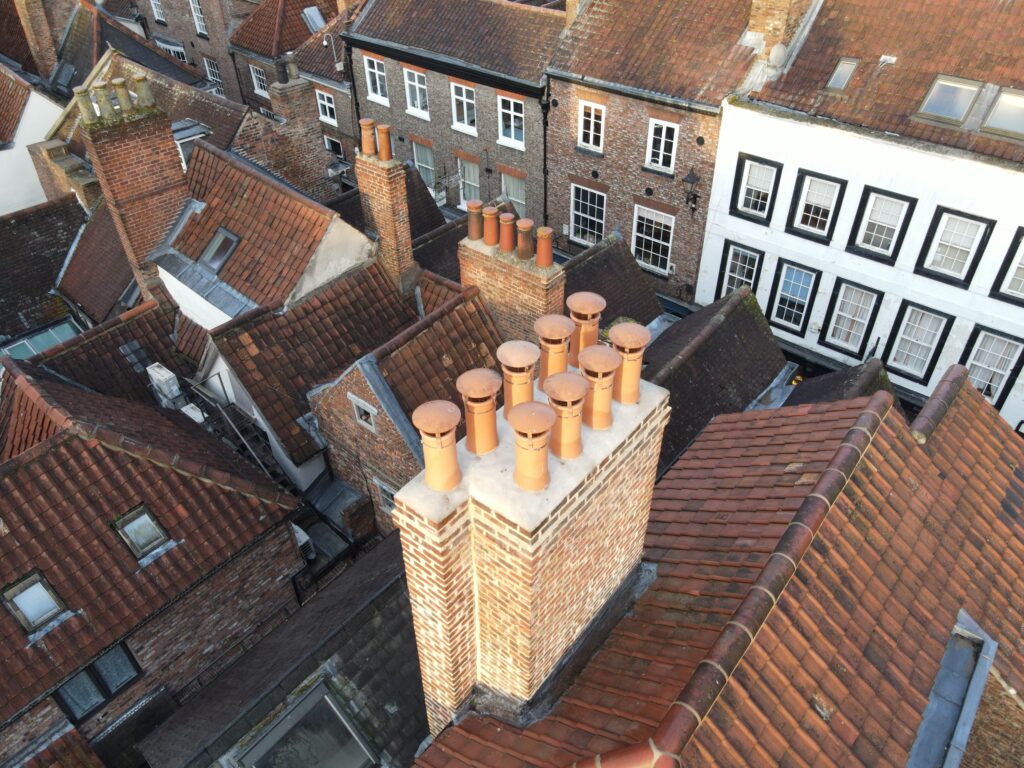
- Spacing: on multi-pot stacks, preserve clear exit paths for each pot. Avoid heads that crowd outlets.
- Liner support: lined stoves need pot-hangers sized to pot OD and liner diameter.
- Cleaning access: spark-arrestors and bird-guards are great—if you can brush them routinely.
Aftercare that protects your purchase
Buying the right head is half the win. The rest is light, regular care. Chimney Cowl Buying Mistakes UK often show up months later because nobody re-tensioned straps after the first storm, or brushed mesh before peak season.
- Pre-season: brush mesh/cap until daylight passes clearly; check band tension or plate level.
- Post-storm: re-tension bands; re-torque bolts; confirm cap hasn’t migrated.
- Mid-season: quick visual on windy sites; spinning heads need bearing checks.
- Cold starts: use Hot Box® Firestarter to prime clean and hot.
Worked UK buying scenarios
Open fire, inland terrace—rain smell only
You’re replacing a basic cap after water staining. To avoid Chimney Cowl Buying Mistakes UK, pick a deep rain-cap with generous clearance and a strap range that comfortably covers your pot OD. Add a reminder to re-tension after the first storm.
Stove on a coastal headland—night hum
Skip thin galvanised caps. Buy a stainless anti-downdraught with stiffer sections. Choose bolt-down if the rim is chipped. This combination fixes hum and survives salt.
Suburban ridge, gusty cross-winds—puffs and smoke
Don’t buy a bird-guard to cure wind. That’s the heart of Chimney Cowl Buying Mistakes UK. Purchase an anti-downdraught head, set clearance generous, and plan a post-storm strap check.
Two-pot stack: stove + redundant flue
Buy a pot-hanger for the lined stove (matched to liner and pot OD) and a vented capper for the unused flue. You’ll prevent pressure theft and damp odours.
Thatched property—insurer demands ember control
Buy a spark-arrestor and commit to brushing. Choose models that preserve exit area and keep a diary reminder—this prevents whistle and maintains draw.
Under trees—nests and leaf debris
Purchase a bird-guard sized for your pot, with a mesh aperture you can actually clean. Set a pre-season brushing routine to avoid restriction.
FAQs
Will a universal cowl fix everything?
No. “Universal” is the fastest route to Chimney Cowl Buying Mistakes UK. Match the head to the symptom and protect the exit area.
How do I know if I need bolt-down?
If your pot rim is chipped, friable or the site is very exposed, bolt-down is the quiet, stable choice. It prevents the migration that causes rattles.
Do I need stainless inland?
Not always. Inland buyers can choose galvanised to save money, provided they plan light maintenance. Coastal sites benefit most from stainless.
What should I buy for mixed wind and rain?
Start with anti-downdraught and maintain generous cap clearance. Many modern profiles also deflect wind-driven rain well.
Who can install if I don’t want to DIY?
Use The Stove Guys to book vetted pros nationwide. Share this page—Chimney Cowl Buying Mistakes UK—to align on the brief.
Conclusion & buying links
Chimney Cowl Buying Mistakes UK disappear when you measure accurately, match the head to the symptom, select the correct fixing, choose the right material for your exposure, and guard the free exit area. Add simple maintenance and your chimney will light easier, run quieter and last longer—all winter.