Blog
Essential Chimney Cowl for Flexible Flue Liner (2026): Terminate Right


Chimney cowl for flexible flue liner (2026): Terminate Right
Chimney cowl for flexible flue liner is the search that usually follows a real-world problem: you’ve got a stove with a flexible stainless liner, and you want the top of the chimney finished properly so the liner is supported, the pot is capped, rain and birds are controlled, and the outlet stays clear for reliable draw.
This page explains how to choose the right chimney cowl for flexible flue liner, how to size it, what “pot-hanger” means in plain English, and which add-ons (rain-cap, bird-guard) make sense for your site. If you want the fastest route to the correct part, use the selector below.

Safety at height matters. If access is uncertain, use a professional and follow HSE guidance on work at height.
In this page
- What is a chimney cowl for flexible flue liner?
- When you need one (symptoms & scenarios)
- 60-second selector
- Types: pot-hanger vs rain-cap vs bird-guard vs anti-downdraught
- Sizing & compatibility
- Draw, free exit area & avoiding restriction
- Materials for UK exposure
- Installation (best practice checklist)
- Maintenance & troubleshooting
- Common mistakes to avoid
- FAQs
- Conclusion
What is a chimney cowl for flexible flue liner?
A chimney cowl for flexible flue liner is a termination component designed specifically for a chimney that has been lined with a flexible stainless-steel liner. The key difference (versus a generic pot cowl) is that a liner cowl is intended to support the liner at the top of the stack and form a neat, serviceable finish.
In practical terms, it should do four things well: (1) hold the liner securely, (2) keep rain from dropping straight into the flue, (3) reduce the chance of birds/debris entering, and (4) preserve a clear outlet so the stove continues to draft properly.
When you need a chimney cowl for flexible flue liner
Strong signs you need the correct liner termination
- Your stove connects to a flexible liner (common sizes: 125mm or 150mm).
- You get damp odours after rain (“wet soot” smell) even when the stove is not in use.
- There’s staining at the fireplace breast / register area, or you’ve seen water marks inside the appliance.
- The pot top looks unfinished or improvised (temporary cap, loose clamp, poorly sealed detail).
When it might be a different cowl type
- Smoke puffs in gusts: consider anti-downdraught cowls.
- Bird nesting is the issue: add a bird-guard (plan cleaning).
- Very exposed sites: compare spinning cowls for stability.
60-second selector
| Your scenario | Best match | Why | Action |
|---|---|---|---|
| Lined stove / flexible liner termination | Chimney cowl for flexible flue liner (pot-hanger) | Supports liner and caps pot correctly | Buy pot-hanger liner cowl |
| Rain ingress is the main complaint | Pot-hanger + rain-cap (if needed) | Controls water while keeping outlet clear | Add rain cap |
| Nesting / twigs / debris | Pot-hanger + bird-guard | Stops entry; requires seasonal clean | Add bird guard |
| Wind blow-back / smoke puffs | Anti-downdraught | Addresses turbulence not water entry | Fix downdraught |
Types: what you’re actually buying
People often search chimney cowl for flexible flue liner and end up looking at generic cowls that do not support the liner. For a lined appliance, think in systems: liner support first, then rain and wildlife protection as required.
Pot-hanger liner cowl (the standard solution)
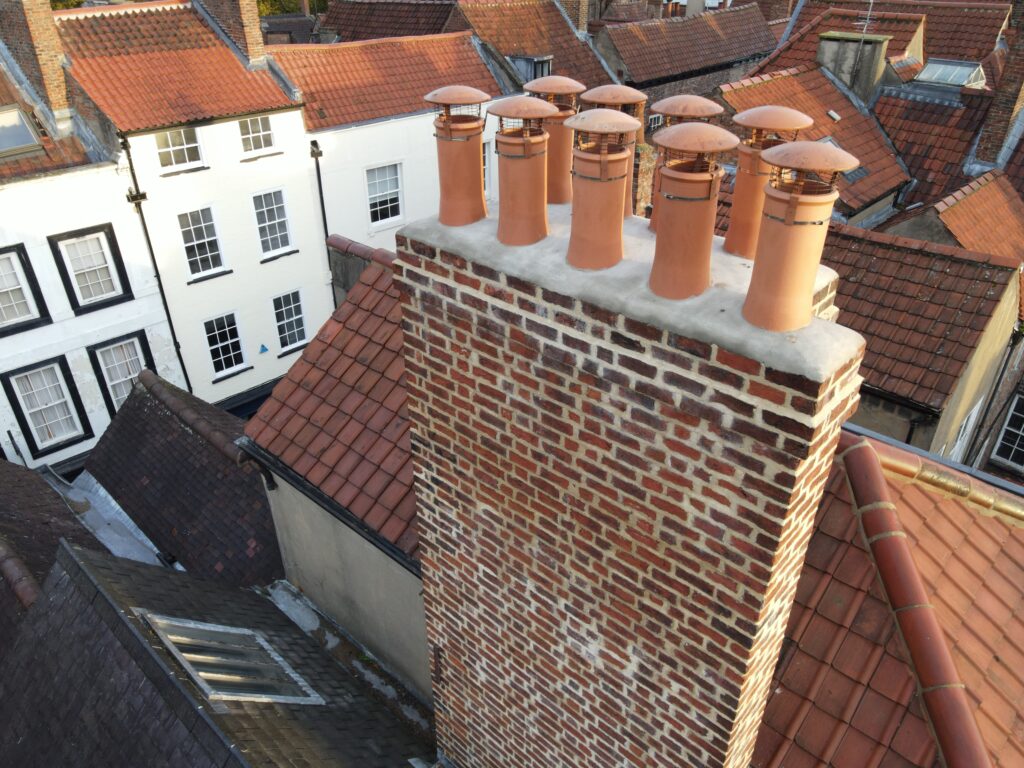
A pot-hanger cowl is the most common chimney cowl for flexible flue liner because it clamps and supports the liner while forming a tidy cap to the pot. It is typically the correct choice when you want a reliable, serviceable termination detail.
- Supports liner weight and reduces movement.
- Provides a clean weathering finish.
- Can be inspected and re-tightened after storms.
Rain-cap & bird-guard: add-ons that make sense
Add-ons are useful when your environment demands them. If the property is exposed and rain ingress is a recurring issue, a rain-cap can help. If birds nest locally, a guard is usually worth it — but only if you’ll clean it.
- Rain: reduces water entry and damp odours.
- Birds: prevents nesting and debris drop.
- Maintenance: mesh needs seasonal checks.
Sizing a chimney cowl for flexible flue liner
Correct sizing protects performance and prevents call-backs. A chimney cowl for flexible flue liner must match two measurements: (1) the liner diameter, and (2) the chimney pot outside diameter (OD) so the clamp/strap fixes securely.
Measure in the right order
- Liner diameter: commonly 125mm (5″) or 150mm (6″).
- Pot OD: measure across the rim; check twice if the pot is oval.
- Fixing range: ensure clamp/strap fits your pot size.
- Outlet clearance: keep the exit generous to preserve draft.
Need help measuring? See: Chimney Cowl Size Guide.
Typical liner sizes (UK)
| Liner size | Typical context | What to check |
|---|---|---|
| 125mm | Many 4–5kW appliances (model dependent) | Manufacturer spec + correct termination |
| 150mm | Many 5–8kW appliances (model dependent) | Pot OD + outlet clearance |
| 180–200mm | Larger appliances / legacy setups | Compatibility + wind exposure |
Always match the cowl to the liner you actually have on site.
Draw, free exit area & avoiding restriction
How to avoid “killing the draw”
A well-chosen chimney cowl for flexible flue liner should not reduce draw. Most draw problems come from restrictive designs, blocked mesh, or poor installation. Protect performance by checking:
- Free exit area: the outlet should be at least equivalent to the liner cross-section.
- Clearance: gases should leave cleanly without bouncing under a tight cap.
- Mesh loading: bird guards need seasonal cleaning (especially with smoky burning).
- Cold flue reality: a cold liner can smell worse after storms; correct termination reduces water entry.
If you suspect draught issues, read: Chimney draught problems guide.
Materials for UK exposure (coastal vs inland)
Material choice impacts service life. For coastal stacks and high exposure, stainless steel is usually the better long-term option. Inland, galvanised or coated parts can be excellent value if inspected routinely.
- Coastal rule: stainless steel is preferred, and inspect fixings after storms.
- Inland value: coated or galvanised options can perform well with annual checks.
- Serviceability: choose a system that can be checked during sweeping.
Installation (best practice checklist)
- Confirm liner diameter: identify 125mm or 150mm (or your actual size).
- Measure pot OD: ensure your chimney cowl for flexible flue liner clamps securely.
- Choose termination type: pot-hanger for liner support; add bird/rain protection if required.
- Fit square and secure: clamp the liner correctly, tension evenly, and seat the cap properly.
- Check airflow: confirm outlet is unobstructed and level.
- Re-check: inspect fixings after the first storm cycle and after sweeping.
Maintenance & troubleshooting
Maintenance schedule
- In season: visual checks after storms where possible.
- During sweeping: confirm clamp tightness and outlet cleanliness.
- With bird-guards: clean mesh seasonally to protect draw.
Installer guidance varies; for competent install practice and safety awareness see HETAS.
Quick troubleshooting
| Symptom | Likely cause | Fix |
|---|---|---|
| Damp smell after rain | Rain entry + cold liner | Confirm correct termination; consider adding rain protection |
| Debris/twigs in stove | Nesting / leaf drop | Add bird-guard and plan seasonal cleaning |
| Smoke puffs in gusts | Wind turbulence | Use anti-downdraught or compare spinning cowls on exposed sites |
Common mistakes to avoid
- Buying a rain-cap only: it doesn’t support a liner — start with a chimney cowl for flexible flue liner termination.
- Guessing measurements: measure liner diameter and pot OD properly.
- Adding mesh without cleaning: blocked mesh is a common cause of poor draw.
- Ignoring exposure: coastal stacks need better materials and more frequent checks.
- No re-check: always inspect after storms and during sweeping.
Buy the correct Chimney cowl for flexible flue liner
Start with pot-hanger liner support, then add rain or bird protection where required.
FAQs
Do I need a Chimney cowl for flexible flue liner on every lined stove?
In most cases, yes. A chimney cowl for flexible flue liner provides a proper termination that supports the liner and reduces rain/debris entry.
Will a Chimney cowl for flexible flue liner reduce draw?
Not if correctly sized and maintained. Most problems are caused by restriction (tight caps) or blocked mesh on guards.
Can I add a bird guard to a Chimney cowl for flexible flue liner?
Yes. Pairing with a bird-guard is sensible where nesting occurs, but plan seasonal cleaning to keep airflow clear.
Conclusion
A correctly chosen chimney cowl for flexible flue liner is about more than rain protection — it’s the finishing detail that supports the liner, protects against weather and debris, and keeps the outlet clear for stable draw. Measure liner diameter and pot OD, choose a pot-hanger termination first, then add rain or bird protection where your site needs it.