Blog
Powerful Chimney Downdraught Solutions UK (2026): Stop Smoke Blowback Fast


Chimney Downdraught Solutions UK: Stop Smoke Blowback
Effective chimney downdraught solutions UK properties require accurate diagnosis. Smoke entering a room may be caused by wind pressure at the chimney top, a cold flue, insufficient replacement air, extractor fans, an obstructed terminal or a chimney positioned within turbulent airflow. This guide explains how to identify the dominant cause and select the correct remedy.
Stop using the appliance if smoke or fumes enter the room
Persistent smoke spillage may indicate a blocked, defective or unsuitable chimney and should not be treated as a minor inconvenience. Stop using the fire or appliance where safety is uncertain, ventilate the room and arrange inspection by a competent chimney or heating professional. Cowl fitting is also work at height. Review the Health and Safety Executive guidance on safe roof work before planning access.
What is chimney downdraught?
A chimney should normally carry combustion products upward and discharge them safely above the building. Downdraught occurs when this upward flow is reversed or repeatedly disrupted.
True wind-related downdraught
- Smoke enters during particular wind directions.
- The problem becomes worse during gusts.
- Puffing may continue after the chimney is hot.
- Nearby roofs or structures influence performance.
- The problem may be intermittent rather than constant.
Problems that resemble downdraught
- A cold chimney at initial lighting.
- Insufficient air entering the room.
- Kitchen or bathroom extractor fans.
- A blocked chimney or contaminated cowl.
- An unsuitable liner or terminal arrangement.
Diagnostic principle: chimney downdraught solutions UK searches should begin with the timing of the smoke problem. A fault that appears only at lighting-up requires a different response from one that occurs during strong winds after the chimney is already hot.
Fast chimney downdraught diagnosis
Use the pattern of the fault to decide which chimney downdraught solutions UK pathway is most likely to succeed.
| What you observe | Likely cause | First action |
|---|---|---|
| Smoke puffs during gusts but improves when the wind drops | Wind turbulence or pressure at the chimney terminal | Assess chimney position and consider an anti-downdraught cowl |
| Smoke spills only during the first few minutes | Cold flue or weak initial heat | Improve lighting technique and warm the flue more quickly |
| The fire improves when a nearby window is opened | Insufficient replacement air or negative room pressure | Review permanent ventilation and extractor use |
| Draw is weak in all weather conditions | Restriction, blockage, unsuitable liner or chimney geometry | Sweep and inspect the full chimney before changing the cowl |
| The problem began after a new guard or cap was installed | Restricted effective outlet area or wrong terminal | Check product suitability, mesh condition and canopy clearance |
| The property is on an exposed hilltop or coastal headland | High and variable wind exposure | Compare robust anti-downdraught and rotating cowl options |
Do not diagnose by smoke alone. A blocked flue, bird nest, failed liner or unsuitable appliance connection can create similar symptoms and may require urgent correction.
Why chimney downdraught happens
Choosing effective chimney downdraught solutions UK requires an understanding of the competing forces acting on the chimney.
Buoyancy and temperature
Warm flue gases are less dense than colder external air and therefore rise. The greater the useful temperature difference and chimney height, the stronger the potential natural draught.
A cold flue initially contains a dense column of air that may resist upward movement.
Wind pressure
Wind creates positive pressure on exposed faces and suction on sheltered faces. The chimney top can move between these pressure zones as wind direction and speed change.
A poorly positioned or unsuitable terminal may allow pressure to disturb the flue directly.
Roof-level turbulence
Roof ridges, dormers, parapets, extensions, trees and neighbouring buildings create rolling eddies rather than smooth airflow.
A chimney pot positioned within that disturbed zone may experience repeated smoke puffing.
The strongest chimney downdraught solutions UK pages should not imply that every smoke problem is cured by a cowl. Chimney height, room ventilation, flue condition and the connected appliance remain equally important.
Chimney downdraught solutions UK for wind turbulence
Where the chimney is clear and the problem is strongly linked to wind direction, the terminal should reduce direct pressure and provide a stable discharge route.
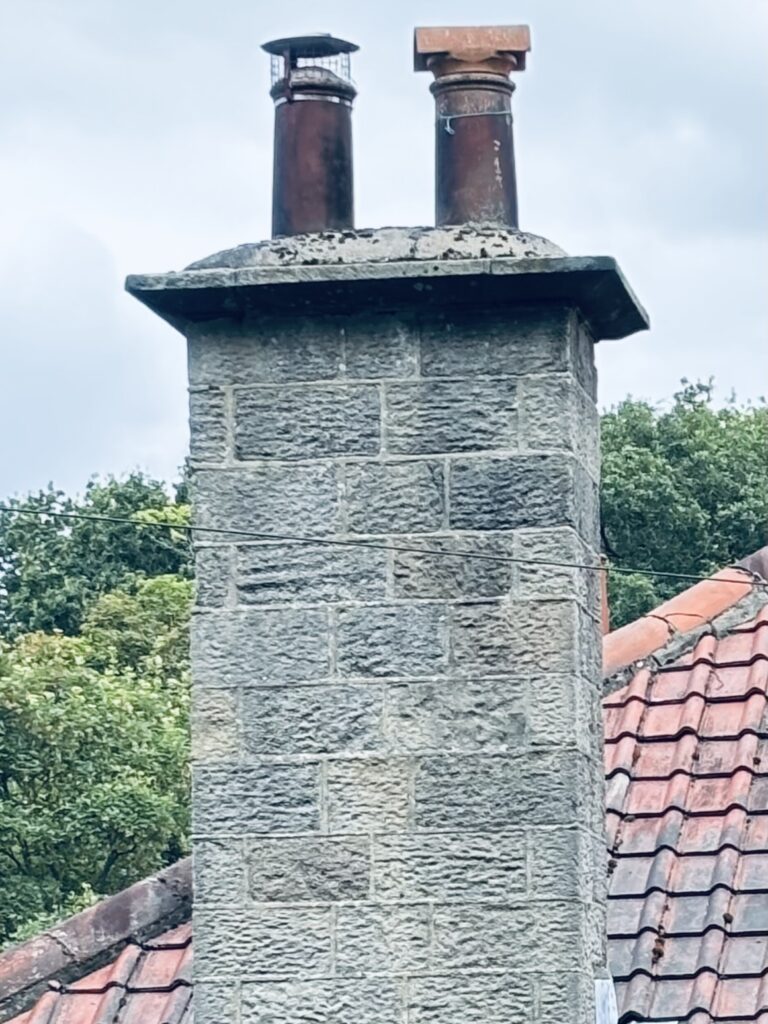
Anti-downdraught cowl
A purpose-designed anti-downdraught cowl shields or redirects wind around the outlet. It is usually the first product category to consider for gust-related smoke blowback.
Rotating or spinning cowl
A rotating cowl responds to changing wind and may create a favourable pressure effect. It can suit very exposed locations but contains moving parts that require maintenance.
Change the chimney termination height
Raising the outlet may move it above a turbulent roof zone. This can be more effective than repeatedly changing cowls where the chimney is badly positioned.
Increasing chimney height affects stability, appearance and construction detailing. It should be designed and completed by competent professionals rather than improvised with unsecured extensions.
How anti-downdraught chimney cowls work
Among the available chimney downdraught solutions UK homeowners consider, a fixed anti-downdraught cowl is often the most straightforward where adverse wind pressure has been diagnosed.
Potential advantages
- No bearings or rotating mechanism.
- Can reduce direct crosswind pressure.
- May protect against some rain and debris.
- Available for chimney pots and liners.
- Generally requires limited routine maintenance.
Selection checks
- Fuel and appliance compatibility.
- Pot or liner diameter.
- Effective outlet and internal baffles.
- Fixing range and chimney-pot condition.
- Material suitability for site exposure.
A basic bird guard should not be treated as an anti-downdraught cowl. It may prevent nesting but provide little control over wind pressure at the terminal.
When should a spinning chimney cowl be considered?
Spinning and rotary terminals form part of the wider chimney downdraught solutions UK market. They can be useful where exposure is high and wind direction changes frequently.
Situations where they may help
- Open rural sites with few wind breaks.
- Coastal headlands and elevated properties.
- Chimneys exposed to rapidly changing wind.
- Persistent pressure problems despite a clear flue.
- Installations where the manufacturer confirms compatibility.
Limitations to consider
- Bearings and moving parts can wear.
- The terminal may become noisy or seize.
- Corrosion resistance matters on coastal sites.
- Soot and debris can impair movement.
- Maintenance access must be retained.
A spinning cowl should not be used to conceal an obstructed flue, insufficient room ventilation or a defective appliance installation.
Chimney height, roof geometry and nearby buildings
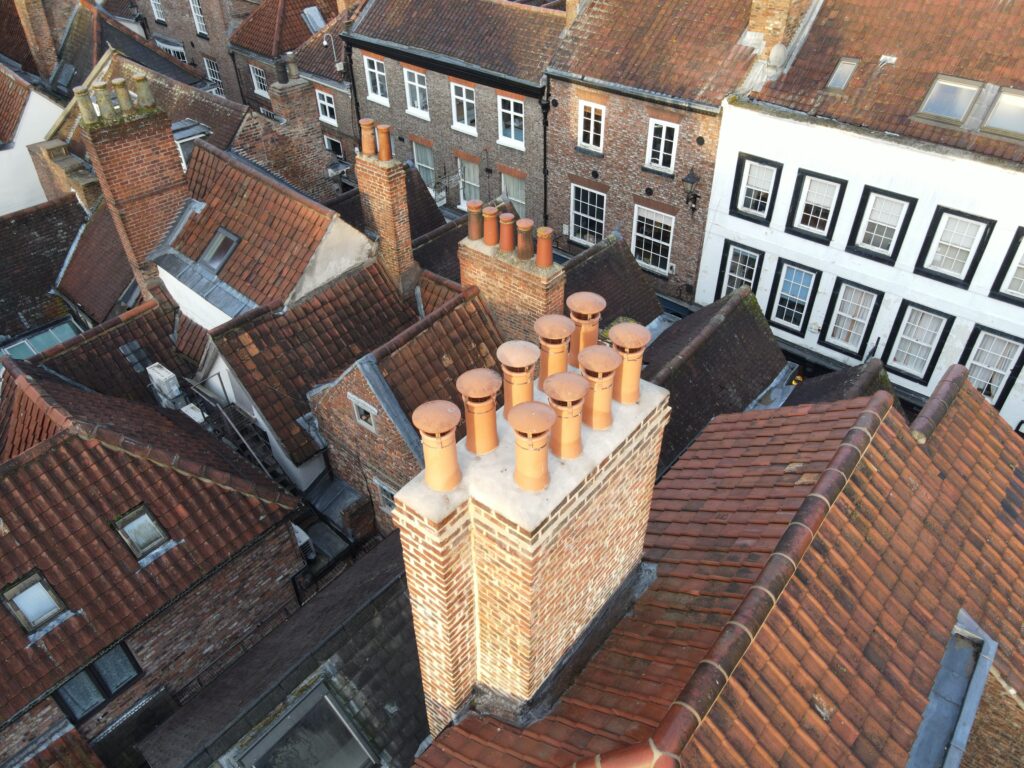
Some chimney downdraught solutions UK projects require changes to the chimney itself because the termination sits within a persistent zone of disturbed air.
Low chimney position
A pot terminating close to a roof surface, parapet or taller ridge may remain inside turbulent airflow.
Extensions and dormers
Later alterations can change the original wind environment and leave a previously satisfactory chimney in a pressure zone.
Adjacent buildings and trees
Taller structures and mature trees can redirect wind and create turbulence that varies seasonally and by wind direction.
Where several cowls have already failed to improve performance, a wider assessment of chimney height, roof form and surrounding obstructions is more useful than purchasing another terminal without diagnosis.
Cold-flue start-up and apparent downdraught
Many requests for chimney downdraught solutions UK are caused by smoke spilling only during lighting. This often indicates a cold, heavy column of air within the chimney rather than persistent wind-driven downdraught.
Typical cold-flue symptoms
- Smoke spills only at initial lighting.
- The chimney performs better after several minutes.
- The problem is worse after long periods of non-use.
- External chimney stacks are more affected.
- Cold and damp weather increases the problem.
Practical checks
- Open the appliance air controls as instructed.
- Turn off strong extract fans temporarily.
- Provide replacement air where necessary.
- Use dry fuel and a decisive lighting method.
- Do not overload the fire at start-up.
Smoke spillage that continues after the chimney becomes hot is unlikely to be explained by a cold flue alone. The chimney, termination and room ventilation should then be assessed more fully.
Using a strong initial fire to establish draught
Improving initial heat can form part of chimney downdraught solutions UK where the complaint occurs mainly at start-up. The objective is to warm the flue quickly and shorten the unstable, smoky phase.
Why lighting quality matters
- A strong flame warms the flue faster.
- Dry fuel produces more useful heat.
- Open fuel spacing supports airflow.
- Repeated failed relights cool the system.
- Slow smouldering extends smoke production.
Hot Box Firestarter
Hot Box Firestarter is designed to create a concentrated and reliable start without a separate bundle of loose kindling and conventional firelighters.
It can help promote initial heat, but it will not correct true wind-related downdraught, a blocked flue or insufficient permanent ventilation.
Improving ignition can help a cold chimney establish upward flow. Persistent smoke during gusts requires further diagnosis.
Room pressure, extractor fans and ventilation
Even correctly chosen chimney downdraught solutions UK hardware cannot overcome severe negative pressure within the room. The chimney needs replacement air to support combustion and upward flow.
Extractor fans
Kitchen and bathroom fans can remove air faster than it enters the property. The chimney may then become an unintended replacement-air route.
Airtight buildings
Replacement windows, draught proofing and sealed doors reduce uncontrolled air leakage. This can expose an existing ventilation shortfall.
Competing appliances
Several fireplaces, stoves or extraction systems can interact. One flue may draw air down another unused chimney.
If opening a nearby window noticeably improves the fire, treat that result as a diagnostic clue rather than a permanent solution. The property may require a properly designed air supply.
Restricted terminals and blocked chimney cowls
Chimney downdraught solutions UK can fail when a new terminal creates more resistance than the chimney can tolerate.
Common terminal restrictions
- Fine bird mesh contaminated with soot.
- A rain canopy positioned too close to the outlet.
- An undersized liner connector.
- Dense internal wind baffles.
- Improvised guards or added mesh.
- A rotating head that has seized.
Symptoms of restriction
- Weak draw in calm weather.
- Smoke problems beginning after installation.
- Whistling through a narrow opening.
- Rapid soot deposits at the terminal.
- Poor appliance response at all temperatures.
- Smoke clearing slowly from the fire chamber.
Physical fit does not confirm safe compatibility. The cowl must suit the appliance, fuel, flue diameter and required outlet conditions.
How to measure for a downdraught cowl
Accurate measurement reduces the risk of selecting chimney downdraught solutions UK products that cannot be secured or connected correctly.
For a chimney-pot cowl
- Measure the outside pot diameter.
- Check more than one axis if it is oval.
- Record the available straight-sided height.
- Inspect for mouldings and decorative shoulders.
- Confirm the product’s fixing range.
For a flexible liner
- Confirm the nominal liner diameter.
- Identify the liner material and system.
- Check whether a pot hanger is required.
- Verify the top plate or sleeve arrangement.
- Use compatible components throughout.
Chimney downdraught cowl installation principles
Even suitable chimney downdraught solutions UK products can perform badly if the cowl is loose, off-centre, fitted to a damaged pot or allowed to obstruct neighbouring flues.
Confirm the diagnosis
Verify whether the main issue is wind turbulence, cold-flue start-up, negative room pressure or a restricted terminal.
Sweep and inspect the chimney
Remove soot, nests and other obstructions. Check the complete flue before changing the terminal.
Check the chimney pot
Inspect for cracks, spalling, loose bedding and defective flaunching. Repair an unstable pot before attaching a cowl.
Verify product compatibility
Confirm the fuel, appliance, flue type, diameter, fixing range and exposure suitability.
Position the cowl centrally
Fit the terminal level and clear of neighbouring chimney pots, walls and obstructions.
Tighten fixings evenly
Alternate between adjustable legs, clamps or screws. Avoid cracking a clay pot through excessive force.
Check the complete outlet
Make sure the cap, baffles, guard and connector maintain a clear discharge route.
Test and monitor performance
Check appliance operation and monitor the chimney during the wind conditions that previously caused the fault.
Sealant or fire cement should not replace a designed mechanical fixing. Use jointing materials only where required by the product or flue-system manufacturer.
Chimney downdraught solutions UK comparison table
This matrix provides a practical starting point for deciding which remedy deserves further investigation.
| Symptom | Likely cause | Most relevant solution | Next step |
|---|---|---|---|
| Smoke puffs during strong gusts | Wind pressure or turbulence at the terminal | Anti-downdraught cowl | Compare fixed cowls |
| Severe exposure with changing wind | High-energy and variable airflow | Rotating or spinning cowl | Compare spinning cowls |
| Smoke only during lighting | Cold flue or slow initial heat | Improve lighting and initial draught | Review start-up guidance |
| Performance improves with a window open | Insufficient replacement air | Ventilation assessment | Review room pressure |
| Weak draw began after a new cap was fitted | Restricted or unsuitable terminal | Replace or reconfigure the terminal | Check outlet restrictions |
| Problem remains after several cowl changes | Chimney height, location or wider system defect | Professional chimney assessment | Investigate roof geometry and flue condition |
Maintenance after correcting chimney downdraught
The best chimney downdraught solutions UK installations remain accessible for sweeping, inspection and adjustment.
During routine chimney sweeping
- Check mesh and outlets for deposits.
- Inspect straps, clamps and connections.
- Look for tilting or distortion.
- Check the chimney pot for cracking.
- Confirm rotating parts move freely.
After severe weather
- Look for movement or missing fixings.
- Listen for new rattling or vibration.
- Check for corrosion or impact damage.
- Inspect surrounding masonry and flaunching.
- Arrange close inspection where movement is suspected.
Where practical, record the wind direction and conditions associated with any repeat smoke incident. This information can help distinguish terminal-level turbulence from a general draught or ventilation problem.
Related chimney downdraught guides and products
Use these resources to compare terminals, measurements, installation methods and common chimney defects.
Chimney downdraught solutions UK FAQs
What is the best solution for chimney downdraught?
The best solution depends on the cause. Wind-related puffing may respond to an anti-downdraught cowl. Smoke only at lighting-up may indicate a cold flue, while improvement with a window open suggests insufficient replacement air.
How do I know whether the problem is wind-related?
Wind-related downdraught is usually intermittent, becomes worse during gusts and may occur only when the wind approaches from certain directions. It can continue after the chimney is fully hot.
Will an anti-downdraught cowl stop smoke entering the room?
It may help where adverse wind pressure at the chimney top is the cause. It will not correct a blocked flue, insufficient room ventilation, poor chimney height or an unsuitable appliance connection.
Are spinning chimney cowls better than fixed cowls?
Not universally. Spinning cowls may suit highly exposed sites with changing wind, while fixed anti-downdraught cowls have no moving parts and may require less maintenance.
Can a cold flue cause smoke blowback?
Yes. Dense cold air within the chimney can initially resist upward flow. A decisive start using dry fuel and adequate replacement air may help establish draught more quickly.
Can extractor fans cause chimney downdraught?
Yes. Extractor fans can depressurise a room and draw air down the chimney, particularly in modern airtight properties or where replacement ventilation is inadequate.
Can a bird guard make downdraught worse?
A suitable and clean guard should maintain an adequate outlet. However, fine or contaminated mesh can restrict the terminal and weaken chimney performance.
Should I increase the chimney height?
Increasing the height may help where the outlet sits within turbulence created by the roof or nearby structures. Structural stability, appearance and construction detailing must be considered.
How often should an anti-downdraught cowl be inspected?
Inspect it during routine sweeping and after severe weather. Exposed fixings, bird mesh and rotating components may require more frequent attention.
Who should investigate persistent chimney downdraught?
A competent chimney sweep, stove installer, fireplace specialist, roofing contractor or appropriately registered heating engineer may be suitable, depending on the appliance and suspected cause.
Choose the correct chimney downdraught solution
Identify whether the fault is caused by wind, a cold flue, room pressure, terminal restriction or chimney geometry. Then match the cowl or remedial work to the diagnosed cause.