Blog
Multi-Flue Terminals & H-Cowls UK (2025)

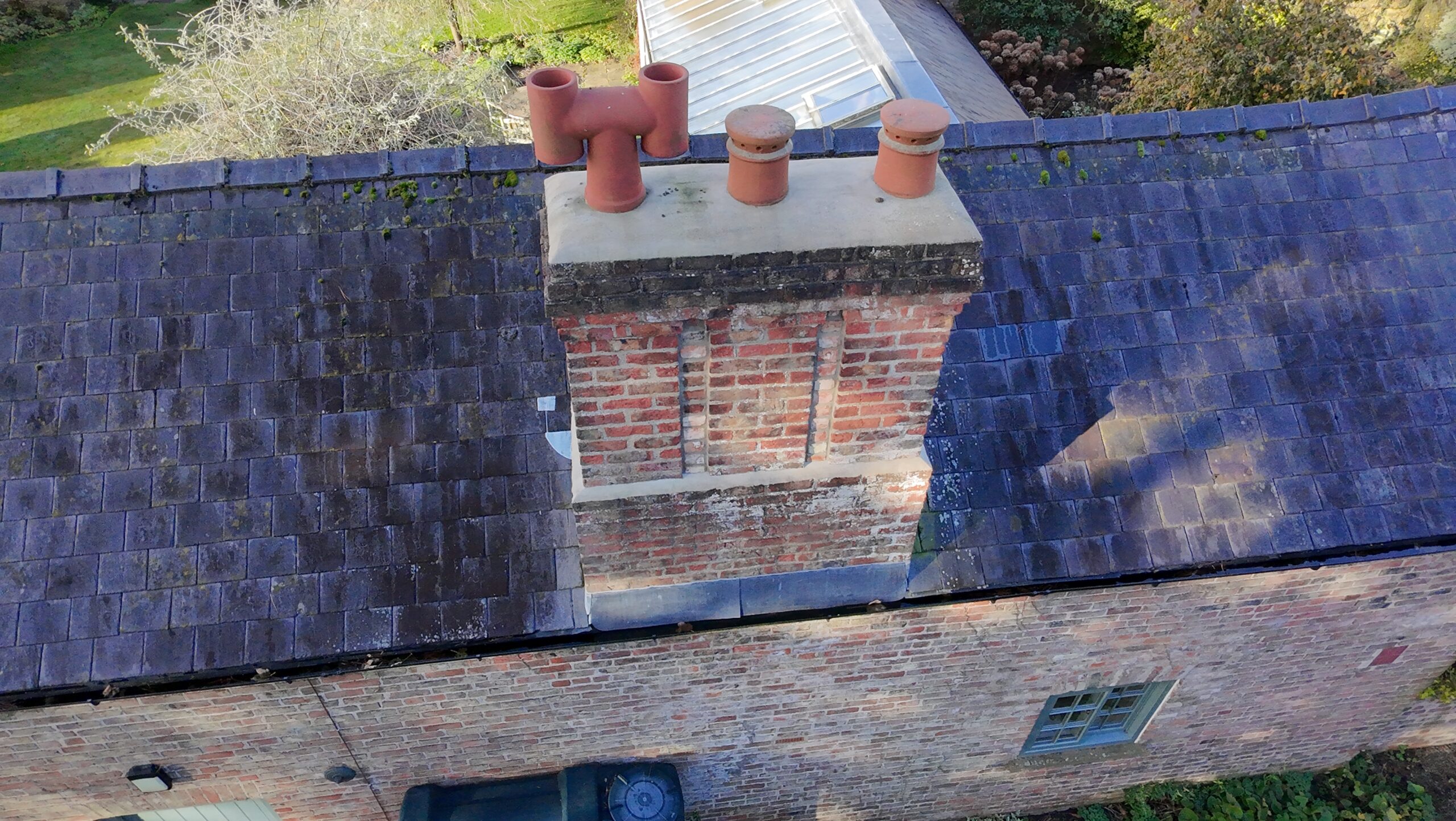
Multi-Flue Terminals & H-Cowls UK (2025)
Multi-Flue Terminals & H-Cowls UK solves the pressure games that happen on busy chimney stacks—multiple pots, mixed appliances, shifting winds and roof turbulence. This page explains when to use an H-cowl or multi-flue terminal, how to size and fix them, how to protect free exit area, and the install/maintenance details that keep draw stable in real UK weather.
Prefer a professional? Book nationwide sweeps & stove specialists via The Stove Guys. In Dundee, contact Hot Box Stoves Dundee.
In this page
- Why Multi-Flue Terminals & H-Cowls UK matters
- What is an H-cowl? What is a multi-flue terminal?
- When to use them (and when not to)
- Sizing & free exit area (don’t choke the stack)
- Fixings: strap & band vs bolt-down vs pot-hanger
- Co-existing appliances on one stack
- Materials & exposure (coastal vs inland)
- Installation steps (text-only)
- Maintenance & troubleshooting
- Real UK scenarios (fast wins)
- Comparison table (H-cowl vs alternatives)
- Pre-order checklist
- Related guides
- FAQs
- Conclusion & buying links
Why Multi-Flue Terminals & H-Cowls UK matters
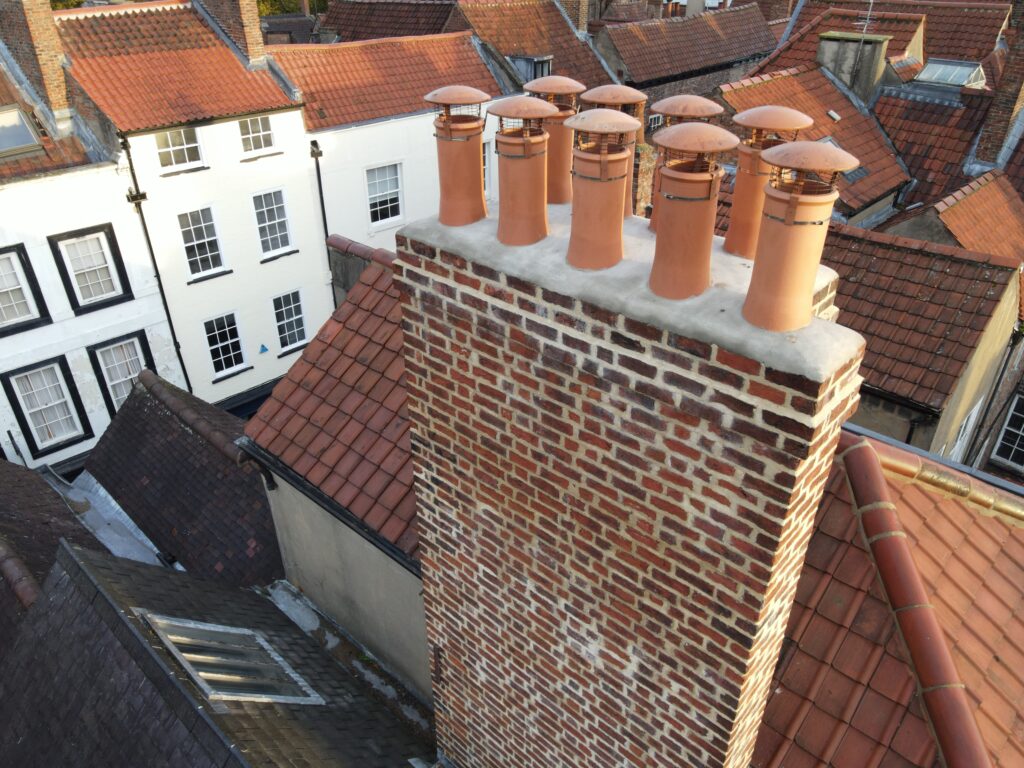
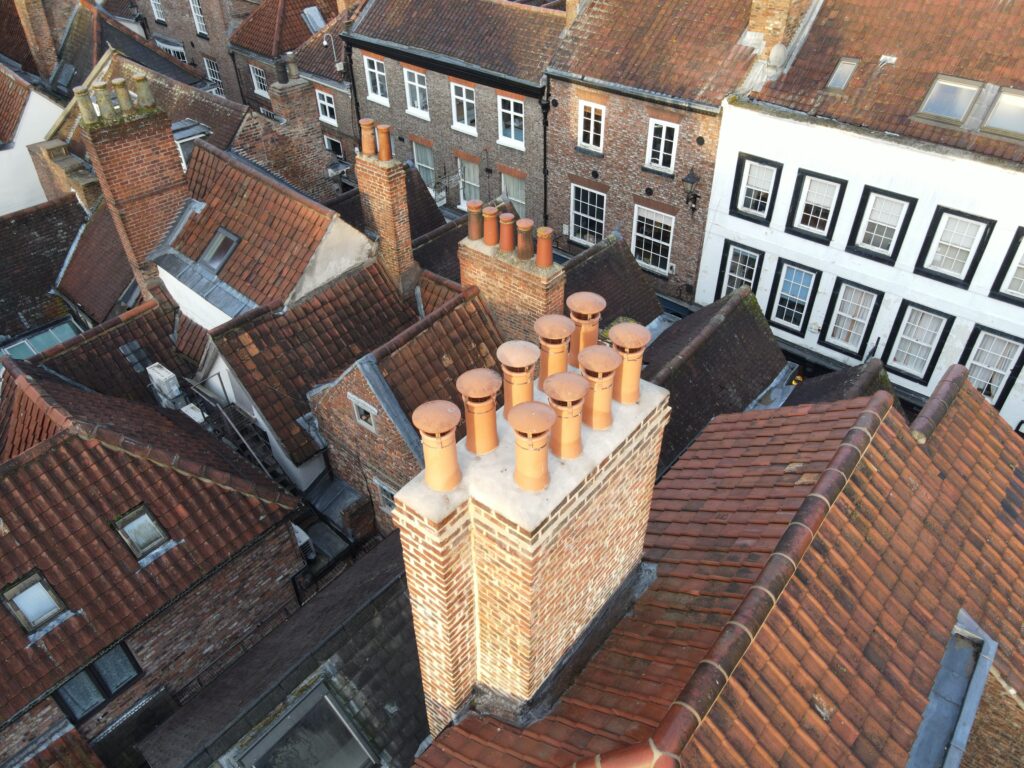
On multi-pot stacks, one active flue can disturb its neighbours. Gusts, parapets and roof forms create turbulence, while temperature differences set up pressure conflicts. Multi-Flue Terminals & H-Cowls UK provides stable, low-resistance pathways that reduce downdraught and cross-talk between pots—improving safety, start-up and comfort.
What is an H-cowl? What is a multi-flue terminal?
- H-cowl: two vertical risers bridged by a cross-tube (forming an “H”). It sits above a single flue and uses pressure equalisation to resist downdraught and gust-induced puffing.
- Multi-flue terminal: a combined top that organises two or more flues on one mounting, guiding each flue’s gases while shielding from cross-winds and rain. Some variants include bird-guards or rain deflectors per flue.
When to use them (and when not to)
Use an H-cowl or multi-flue terminal when…
- Two or more active flues on one stack interact (smoke smells, puffing, back-flow).
- Prevailing winds cause recurrent downdraught even after basic cowl upgrades.
- Very exposed/coastal roofs create vortex shedding and unstable draw.
- You need coordinated rain/wildlife protection across multiple pots.
Consider alternatives when…
- Only rain ingress is the issue—choose a rain-cap on each pot.
- Only wildlife ingress is the issue—fit bird-guards sized to each pot.
- A single flue puffs in gusts—an anti-downdraught cowl may be the simpler fix.
Sizing & free exit area (don’t choke the stack)
Whether you pick Multi-Flue Terminals & H-Cowls UK or individual heads, two rules apply: match the terminal to pot/liner size and preserve a generous free exit area. If you reduce exit area below the flue cross-section, you invite smoke roll-out and odours—especially on cold starts.
Quick sizing references
| Flue/Liner (mm) | Target Exit Path | Notes |
|---|---|---|
| 125 | ≥ flue cross-section | Common stove outlet; use pot-hangers for lined installs |
| 150 | ≥ flue cross-section | Most UK stoves; balance mesh with maintenance |
| 180–200 | ≥ flue cross-section | Open fires & larger appliances; ensure generous terminal area |
Need help with pots and strap ranges? See our Chimney Cowl Size Guide UK.
Fixings: strap & band vs bolt-down vs pot-hanger
Strap & band
Ideal for sound clay pots. Pick a band range that comfortably covers the measured outside diameter (OD), and seat the band below the rim curve for even bite.
Bolt-down plate
The right call for chipped or fragile rims and extreme exposure. Level matters—wobble turns into rattle and leaks. Use suitable anchors and high-temp sealant.
Pot-hanger (liners)
For lined stoves, a pot-hanger supports the liner, recentres the outlet and caps the pot in one step. Order by pot OD (band/plate) and liner diameter (spigot).
Unsure which fixing is right? Read Fixings Explained.
Co-existing appliances on one stack
It’s common for a stove to share a stack with an open fire or disused flue. Multi-Flue Terminals & H-Cowls UK helps you prevent pressure “theft” and smells by isolating flows and stabilising the stack head.
- Lined stove + open fire: fit a pot-hanger to the lined flue and a stable rain-cap or anti-downdraught head to the open fire. Consider an H-cowl on the problem flue if gusts persist.
- Lined stove + redundant flue: ventilate the redundant pot using a vented capper; avoid sealing dead—trapped moisture causes damp. See our chimney cappers.
- Multiple lined stoves: ensure each liner exits with its own generous terminal; avoid tight grouping that constricts exit areas.
Materials & exposure (coastal vs inland)
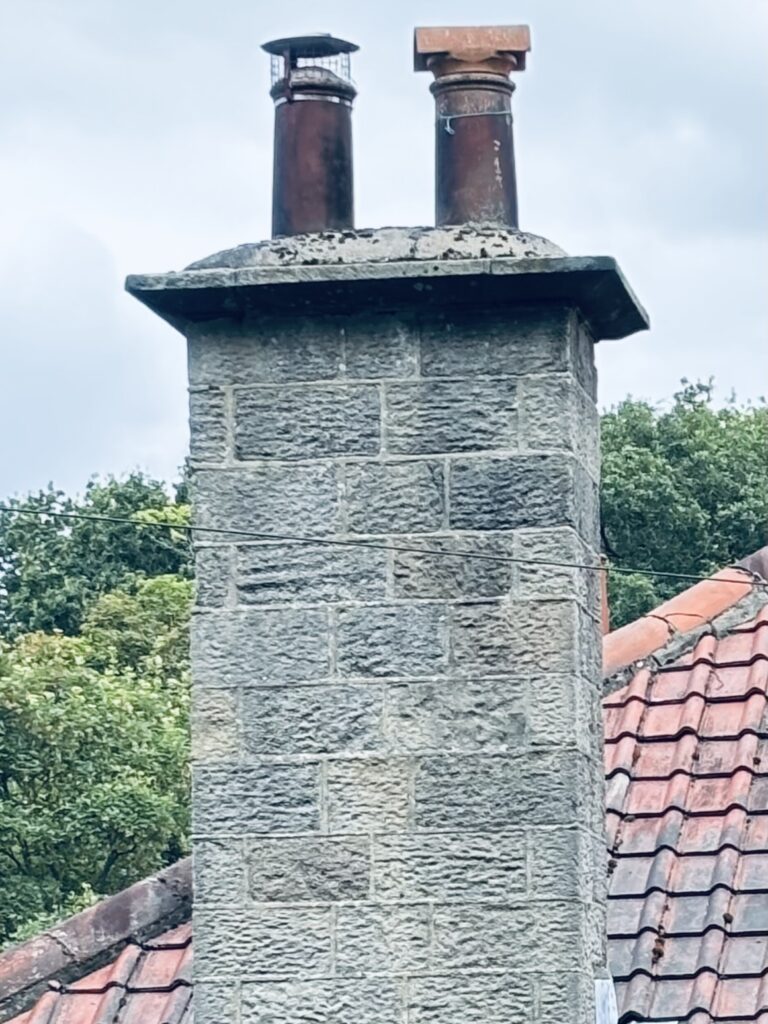
- Stainless steel: best for coast and high winds; stiffer sections reduce vibration on tall multi-flue terminals.
- Galvanised: value inland; re-tension bands after first storms/hot-cold cycles.
- Powder-coated: blends with heritage stacks; inspect coating after sweeping.
Deep dive: Chimney Cowl Materials & Finishes UK.
Installation steps (text-only)
- Survey the stack: note pot condition, exposure, spacing between pots and any parapets/gables influencing wind.
- Measure OD & liner size: confirm each pot’s outside diameter; for lined flues, confirm liner diameter (125/150/180/200 mm).
- Select the solution: H-cowl for stubborn downdraught on a single active flue; multi-flue terminal when you want coordinated protection across pots.
- Choose the fixing: strap & band (sound pots), bolt-down (fragile/exposed), or pot-hanger for lined flues.
- Dry-fit level: wobble equals rattle and leaks. Adjust before tensioning/torquing.
- Protect free exit area: ensure daylight is visible through terminal apertures; don’t crowd the outlet with add-ons.
- First-fire: prime a cold flue with a clean hot start—use Hot Box® Firestarter.
- Post-storm check: re-tension banding; confirm no cap deformation or mesh clogging.
Maintenance & troubleshooting
Seasonal plan
- Brush mesh until daylight passes clearly; check each pot’s terminal clearance.
- Inspect bands/plates for level and even tension; re-check after first storm.
- Coastal: fresh-water rinse after salt-laden storms; schedule extra inspections.
Common issues & fixes
| Symptom | Likely Cause | Fast Fix |
|---|---|---|
| Smoke smell in idle room | Cross-talk between active and idle flues | Stabilise with H-cowl on problem pot; ventilate redundant pots with cappers |
| Puffing in cross-winds | Vortex shedding at stack head | Switch to anti-downdraught head or H-cowl; verify level and exit area |
| Rain ingress | Inadequate cap geometry | Use rain-cap style multi-flue terminal or add rain-cap to affected pot |
| Rattle/hum | Loose bands or off-level plate | Re-seat level, re-tension; consider stainless for stiffness on exposed sites |
Real UK scenarios (fast wins)
- Two-pot stack: lined stove + open fire, gusty suburb. Pot-hanger on the lined flue + anti-downdraught on the open fire. If puffing persists, add an H-cowl to the problem pot.
- Three-pot coastal stack, rotating winds. Stainless multi-flue terminal coordinating rain and wind shielding. Consider spinning head on the worst-affected pot; rinse after storms.
- Open fire + redundant pot with damp odour. Fit a vented capper to the redundant pot; stabilise the active open fire with a rain-cap or H-cowl if cross-winds are strong.
- Lined stove, tall heritage pots, chipped rim. Use a bolt-down plate terminal for stability; ensure generous exit area to avoid hum.
Comparison table (H-cowl vs alternatives)
| Solution | Best for | Pros | Watch-outs | Explore |
|---|---|---|---|---|
| H-cowl | Stubborn downdraught on a single flue | Strong resistance to gusts; pressure equalisation | Larger silhouette; ensure generous exit area | Draught guide |
| Multi-flue terminal | Coordinated protection across pots | Unified rain/wildlife control; tidy look | Mind clearances between outlets | Ultimate guide |
| Anti-downdraught head | Wind puffing on one pot | Lower profile; easy to fit | Per-pot solution (no coordination) | Anti-downdraught |
| Spinning/Rotary | Highly variable winds | Follows wind, assists draw | Service bearings; ensure silent spin | Spinning guide |
Pre-order checklist
- List active vs redundant flues; note appliance types.
- Measure each pot OD; confirm liner sizes (125/150/180/200 mm).
- Select solution: H-cowl (single flue) or multi-flue terminal (coordinated stack).
- Choose fixing: strap & band, bolt-down, or pot-hanger for lined flues.
- Preserve free exit area (≥ flue cross-section for each flue path).
- Pick material: stainless (coastal/exposed) or galvanised/powder-coated (inland).
Ready to stabilise a multi-pot stack?
Related guides
Chimney Cowl Size Guide UK Fixings Explained Noise & Rattle Troubleshooting Materials & Finishes Draught Problems
FAQs
Will an H-cowl fix every downdraught?
It is highly effective on stubborn wind-induced downdraught, but installation quality and free exit area still matter. Verify level, clearance and sizing.
Can I mix an H-cowl with other heads on the same stack?
Yes. Combine per-pot solutions as needed. Ensure none restricts the others’ exit areas and keep clear spacing.
Do multi-flue terminals reduce draw?
Not when sized correctly. Problems arise when exit area is constricted or outlets are too close together.
What fixing is safest on chipped rims?
A level bolt-down plate. It spreads loads and resists lift in gusts.
Which material is best near the sea?
Stainless steel. Rinse after storms and schedule seasonal inspections.
Conclusion & buying links
Multi-Flue Terminals & H-Cowls UK are powerful tools for taming complex stacks. Choose the right terminal, size it to your pots and liners, protect free exit area, and match the fixing and material to your exposure. Do that—and your multi-pot chimney will start cleanly, stay stable in gusts and resist rain and wildlife ingress.