Blog
Protecting Your Chimney: How to Keep Birds Out and Ensure a Safe, Efficient Fireplace


Protecting Your Chimney: How to Keep Birds Out and Maintain a Safe Fireplace
Protecting your chimney from birds, nests and falling debris is an important part of maintaining a safe fireplace or stove. This guide explains why birds enter chimney pots, how to recognise a possible blockage and how a suitable bird guard chimney cowl can reduce future nesting without unnecessarily restricting the flue.

Do not light a fire beneath a suspected bird nest
Stop using the fireplace or appliance if you hear birds, notice nesting material, experience smoke blowback or suspect that the chimney is obstructed. Active wild bird nests are generally protected, so they should not be disturbed or removed while in use. Seek current guidance and arrange assessment by a competent chimney professional before taking action.
Why protecting your chimney from birds matters
A fireplace or stove depends on a clear flue to carry smoke and combustion gases safely outside. Birds, nesting material, leaves and debris can reduce or completely block that route. Protecting your chimney therefore supports both reliable appliance performance and household safety.
Combustion gases may not escape
A partial or complete obstruction can interfere with the upward movement of smoke and gases. This may cause smoke spillage, poor burning or potentially dangerous combustion products entering the room.
Nesting material can be combustible
Twigs, dried grass, leaves and feathers may ignite if a fire is used beneath a nest. A blocked chimney should never be cleared by attempting to burn the obstruction away.
Moisture and contamination can increase
Nests and droppings can retain moisture, create unpleasant smells and contribute to staining or deterioration within the chimney.
Appliance performance can deteriorate
A restricted flue may create lazy flames, difficult lighting, excessive smoke and deposits within the stove or fireplace.
Protecting your chimney is preventative maintenance. A properly selected bird guard helps reduce the chance of future nesting, but the flue must first be swept, inspected and confirmed clear.
Why do birds enter chimney pots?
Chimneys can provide height, shelter, warmth and protection from predators. An open chimney pot may resemble a natural nesting cavity, particularly where the flue is unused or the fireplace is operated only occasionally.
Shelter from weather
A masonry chimney can provide protection from rain and wind, especially where the terminal is open but the flue below is relatively dry.
Warmth from the building
Heat passing through the chimney breast or roof space can make a chimney attractive during cooler periods.
Safe nesting height
Chimney pots are often above surrounding trees and roof structures, offering a protected position away from many predators.
Different bird species use buildings in different ways. Activity can include birds entering the flue, nesting close to the pot, resting on the chimney or dropping material into an open terminal.
Signs that birds may be nesting in your chimney
Bird activity is not always visible from ground level. Several internal and external clues may indicate that the flue requires inspection.
Sounds from the chimney
- Chirping or calling from inside the flue
- Scratching, fluttering or wing movement
- Sounds that increase during daylight hours
- Repeated activity around the same chimney pot
Material appearing below
- Twigs or dried grass in the fireplace
- Leaves, feathers or nesting debris
- Droppings on the hearth or register plate
- Insects associated with decaying nesting material
Changes in chimney performance
- Smoke spilling into the room
- Reduced draught or difficult lighting
- Unusual smells from the chimney
- Previously reliable appliance suddenly performing poorly
Visible roof-level activity
- Birds repeatedly landing on the chimney pot
- Birds entering and leaving the same terminal
- Nesting material visible at the top
- A damaged or missing existing bird guard
Problems caused by birds and nests in chimneys
Birds in a chimney can create more than noise or inconvenience. The effects may involve combustion safety, fire risk, hygiene and damage to the chimney system.
Smoke and gas spillage
An obstruction can prevent smoke and combustion products leaving normally. This can cause fumes to enter occupied rooms.
Chimney fire risk
Dry nesting materials can ignite. They can also collect soot and tar, increasing the amount of combustible material within the flue.
Flue contamination
Droppings, feathers, insects and organic matter can create odours and unsanitary conditions.
Water retention
Nest material can retain moisture and contribute to damp smells, staining and deterioration.
Damage to liners
Nesting material, moisture and contaminants can affect the condition of flexible liners and flue components.
Trapped or deceased birds
A trapped bird may cause distress, noise and contamination. Professional assistance may be needed to determine the safest response.
A carbon monoxide alarm does not make a blocked chimney safe. Alarms provide an important warning but do not replace chimney sweeping, inspection, ventilation or safe appliance operation.
Protecting your chimney with a bird guard cowl
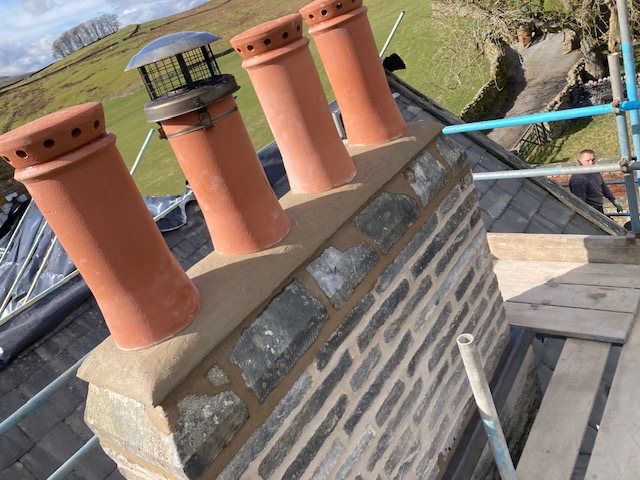
A bird guard chimney cowl is designed to prevent birds and larger debris entering the chimney while allowing smoke or ventilation air to pass through. The guard normally combines a canopy, supporting frame and mesh or spaced metal barriers.
Reduces bird entry
Correctly sized openings prevent birds reaching the flue while maintaining the outlet required for the connected appliance.
Limits nesting debris
The guard can reduce the entry of twigs, leaves and other larger materials that might contribute to blockage.
Can include rain protection
Many bird guard cowls include a canopy that also reduces direct vertical rainfall entering the chimney pot.
Supports reliable flue performance
By preventing physical obstruction, a suitable and maintained guard helps the chimney retain a clear discharge route.
Mesh creates a maintenance requirement. Soot, tar, leaves and other deposits can reduce the effective outlet area. Bird guard cowls must remain accessible for inspection and cleaning.
How to choose the correct chimney bird guard
A bird guard that fits around a chimney pot is not automatically suitable for the connected appliance. Protecting your chimney safely requires a product matched to the fuel, flue, pot size, required outlet area and site exposure.
| Installation type | Possible guard arrangement | Key consideration |
|---|---|---|
| Open fireplace | Large-outlet bird guard suitable for solid fuel | Avoid unnecessarily restrictive mesh or narrow outlet gaps |
| Wood-burning stove | Solid-fuel bird guard or compatible liner cowl | Confirm liner size, temperature rating and system compatibility |
| Flexible flue liner | Dedicated liner bird guard or pot-hanger termination | The terminal may also need to support and weather the liner |
| Gas appliance | Approved appliance-specific gas terminal | Do not add generic mesh or a solid-fuel guard |
| Oil appliance | Manufacturer-compatible oil flue terminal | Check material and condensate compatibility |
| Unused chimney | Ventilating capper with bird protection | Maintain high- and low-level airflow through the flue |
Measurements to confirm
- Outside diameter of the chimney pot
- Internal diameter where an insert is used
- Flexible liner diameter where present
- Available straight-sided fixing height
- Clearance from neighbouring chimney pots
Product details to check
- Suitable fuel and appliance type
- Minimum and maximum fixing range
- Material and corrosion resistance
- Mesh spacing and cleaning access
- Suitability for coastal or exposed locations
Use the Chimney Cowl Finder to narrow the options by appliance, fuel, chimney type and the problem you need to solve.
Can every chimney use the same bird guard?
No. Different appliances require different terminal arrangements. Mesh, baffles and outlet restrictions that are acceptable for one system may be unsafe for another.
Wood and solid fuel
Choose a guard expressly suitable for solid fuel and the expected flue temperature. The outlet should remain generous and any mesh must be inspected regularly for soot or tar accumulation.
Gas appliances
Never fit a generic bird guard or add mesh to a gas terminal without specific approval. Gas flues should be assessed by a suitably qualified Gas Safe registered engineer.
Oil appliances
Follow the appliance and flue manufacturer’s instructions. The terminal must be suitable for the fuel, flue gases and possible condensate.
What should you do if birds are already nesting?
If birds are actively using a nest, do not light the appliance, attempt to smoke them out or remove the nest yourself. Active nests and nesting birds are generally protected in the UK, although the precise position depends on the circumstances and current legislation.
Stop using the chimney
Do not use the fireplace, stove or connected appliance while an obstruction or active nest is suspected.
Confirm whether the nest is active
Observe from a safe distance and seek advice from an appropriate wildlife or chimney professional. Avoid climbing onto the roof solely to investigate.
Wait until lawful removal is possible
Removal should only take place when the nest is no longer active and the work can be completed lawfully.
Arrange sweeping and inspection
A chimney sweep should remove the abandoned material and inspect the flue for blockage, contamination or damage.
Install preventative protection
Fit a suitable bird guard before the chimney is left vulnerable to nesting again, provided the product is compatible with the system.
Professional bird guard chimney cowl installation
Bird guard installation may appear straightforward, but the work involves access at height, product selection and combustion-safety considerations. Professional installation is appropriate for most properties.
Before fitting
- Sweep and inspect the chimney
- Confirm that no active nest remains
- Identify the appliance and fuel
- Measure the chimney pot or liner
- Inspect the pot, flaunching and masonry
- Plan suitable roof access
During installation
- Position the guard centrally
- Use the designed mechanical fixing
- Tighten straps or clamps evenly
- Avoid cracking the chimney pot
- Confirm adequate outlet clearance
- Check that mesh remains serviceable
A ladder is not automatically a safe working platform. Chimney work should be planned with suitable access equipment. Read the HSE guidance on roof work before attempting any work at height.
Other ways of protecting your chimney from birds
A compatible bird guard is the principal method of protecting an open flue, but routine inspection and maintenance can also reduce the risk of repeat problems.
Arrange routine sweeping
Regular sweeping identifies obstructions, damaged guards and developing deposits before they create a more serious problem.
Inspect before the nesting season
Fitting suitable protection before birds begin nesting is far easier than resolving an active nest later.
Repair damaged chimney pots
Cracked pots, missing terminals and failed flaunching can create vulnerable openings and prevent a guard being fixed securely.
Review nearby access points
Overhanging branches may provide convenient perching points, although tree work should be proportionate and consider wildlife restrictions.
Ventilate unused chimneys
A redundant flue should usually be weather-protected and ventilated rather than sealed completely.
Check neighbouring pots
Birds may enter an adjacent unprotected flue even where the active chimney already has a guard.
Visual deterrents, spikes and sound devices may sometimes discourage birds from landing on parts of a roof, but they do not provide the same physical protection as a correctly fitted chimney bird guard.
Maintaining a bird guard chimney cowl
Protecting your chimney does not end when the cowl is installed. Mesh, straps, clamps and chimney pots remain exposed to soot, wind, frost, rain and corrosion.
| Inspection point | What to check | Reason |
|---|---|---|
| During sweeping | Mesh, soot deposits, tar and flue clearance | Restricted mesh can reduce chimney performance |
| After severe wind | Movement, rattling, loose straps and distortion | Wind can expose weaknesses in the fixing |
| Before regular winter use | Nesting activity, leaves and general stability | Confirms the chimney is ready for operation |
| At roof inspections | Chimney pot, flaunching, pointing and corrosion | The guard depends on a sound supporting chimney |
When should you arrange a roof and chimney inspection?
Increased bird activity may coincide with damaged pots, loose mortar, open roof voids or deteriorated chimney components. A broader roof inspection can identify defects that are not visible from the ground.
Arrange closer inspection if:
- The existing bird guard is loose or missing
- The chimney pot appears cracked or tilted
- Mortar or debris is falling from the stack
- Water staining accompanies the bird problem
- There are gaps around flashings or roof coverings
- Birds may be entering the roof void elsewhere
Roof and chimney expertise
Where the concern extends beyond the chimney terminal, a roofing contractor can inspect the stack, flaunching, pointing, chimney pots, flashings and adjacent roof coverings.
For specialist roof and chimney work, visit Neal Roofing .
Common mistakes when protecting your chimney
Lighting a fire beneath a nest
This creates a fire and smoke-spillage risk and may unlawfully disturb nesting birds.
Removing an active nest
Active nests are generally protected. Obtain appropriate advice before disturbing nesting material.
Fitting the wrong guard
A product that fits the chimney pot may still be incompatible with the appliance, fuel or flue.
Adding unapproved mesh
Improvised mesh can restrict the flue, collect deposits and create a safety hazard.
Ignoring maintenance
Bird mesh may become obstructed by soot, leaves, tar or corrosion if it is never inspected.
Fitting to a damaged pot
Tightening a guard around cracked clay can worsen the damage and leave the cowl insecure.
More guidance for protecting your chimney
Protecting your chimney from birds: FAQs
How do I stop birds entering my chimney?
Fit a compatible bird guard chimney cowl after confirming that the flue is clear and no active nest remains. The guard must suit the appliance, fuel, chimney pot or liner and required outlet area.
How do I know whether birds are nesting in my chimney?
Common signs include chirping, scratching, fluttering, birds repeatedly entering the same chimney pot, twigs falling into the fireplace, unpleasant smells or a sudden change in chimney draught.
Can I remove a bird nest from my chimney?
Do not disturb an active nest. Active wild bird nests are generally protected under UK law. Seek current advice and arrange removal only when the nest is no longer active and the work can be completed lawfully.
Can I light a fire to remove a bird nest?
No. Nesting material can ignite, block the flue and cause smoke or fire to spread unpredictably. Stop using the chimney and arrange professional inspection.
Will a bird guard affect chimney draught?
A correctly selected and maintained guard should provide the outlet conditions required by the chimney system. Draught can be affected if the guard is unsuitable, undersized or blocked by soot and debris.
Can I fit a bird guard to a gas chimney?
Do not add a generic bird guard or mesh to a gas flue. Gas terminals are appliance-specific safety components and should be assessed by a Gas Safe registered engineer.
Does a bird guard also stop rain?
Many bird guards include a canopy that reduces direct rainfall, but performance varies by design and exposure. Wind-driven rain may require a more specialised terminal.
How often should a chimney bird guard be inspected?
Inspect it during routine chimney sweeping, before regular seasonal use and after severe weather. Mesh-based guards may require more frequent cleaning.
Can birds enter a lined chimney?
Yes, if the top of the liner or pot is inadequately protected. A compatible liner cowl or pot-hanger terminal may be needed to protect and terminate the flexible liner.
What should I use on an unused chimney?
A ventilating chimney capper can reduce rain and bird entry while maintaining airflow. A redundant chimney should not normally be sealed in a way that traps moisture.
Who can install a bird guard chimney cowl?
Depending on the chimney and appliance, installation may be completed by a competent chimney sweep, stove installer, roofing contractor or chimney specialist. Gas appliance terminals require a suitably qualified Gas Safe engineer.
Start protecting your chimney today
Choose a bird guard cowl that matches the fuel, flue, chimney-pot measurements and site exposure. Browse the product range or use the Cowl Finder to narrow the options.