
Chimney Cowl: Buy the Best Chimney Cowl for Your Home
Chimney Cowl The Complete UK Guide to Choosing the Right Cowl
Whether you are installing a wood-burning stove, solving chimney downdraught, preventing birds from nesting or replacing a damaged terminal, choosing the correct chimney cowl matters. This guide explains cowl types, appliance compatibility, sizing, fixing methods, common chimney problems and safe installation.
Choosing the Correct Terminal
How to choose the right chimney cowl
Most people begin searching for a chimney cowl after noticing a problem. Smoke may blow back into the room, birds may begin nesting in the flue, rainwater may enter an open chimney pot or a newly installed wood-burning stove may require a suitable terminal.
There is no universal chimney cowl that is suitable for every property. The correct choice depends on the appliance, fuel type, chimney construction, flue diameter, chimney pot dimensions, local wind conditions and the particular problem the terminal is intended to solve.
Some chimney cowls are designed primarily to reduce bird entry. Others limit direct rain penetration, terminate flexible flue liners or maintain ventilation to redundant chimneys. Specialist anti-downdraught cowls may help where wind pressure interferes with the normal upward movement of combustion gases.
A product that fits physically may still be unsuitable for the appliance beneath it. Solid-fuel systems, open fires, gas appliances and unused flues can all require different terminal arrangements. Correct selection therefore begins with the complete appliance and flue system—not simply the diameter or appearance of the chimney cowl.
Popular Starting Points
Essential chimney cowl guides
Use these specialist guides to identify the right type of chimney cowl, confirm your measurements or investigate the likely cause of a chimney problem before ordering.
Best Chimney Cowl for a Wood-Burning Stove
Compare solid-fuel-compatible chimney cowls for lined and unlined stove installations.
Read the stove cowl guide 02Chimney Cowl Sizing Calculator
Check chimney pot, flue liner and fitting dimensions before selecting a chimney cowl.
Use the sizing calculator 03Chimney Downdraught Solutions
Understand wind pressure, smoke blowback and when an anti-downdraught chimney cowl may help.
Diagnose chimney downdraught 04Bird Guard Chimney Cowls
Compare guarded chimney terminals intended to reduce nesting birds and larger debris entering the flue.
Choose a bird guard 05Rain Entering the Chimney
Distinguish direct rain entry from defects involving flashing, flaunching, masonry or condensation.
Diagnose rain ingress 06Do I Need a Chimney Cowl?
Learn when fitting a chimney cowl is appropriate and when the chimney or flue system should be investigated further.
Read the decision guideUnderstanding the Complete System
Chimney anatomy: where the chimney cowl fits
Before choosing a chimney cowl, it helps to understand the complete route taken by smoke and combustion gases. The visible fitting on top of the chimney is only the final component in a system that begins at the fireplace or appliance and continues through the connecting pipe, flue and chimney pot.
Every part of that system can affect performance. A damaged liner, obstructed flue, unsuitable chimney height or inadequate supply of combustion air cannot necessarily be corrected by replacing the chimney cowl.
The best results come from identifying the underlying requirement first and then selecting a terminal designed for the appliance, fuel, flue arrangement and conditions at roof level.
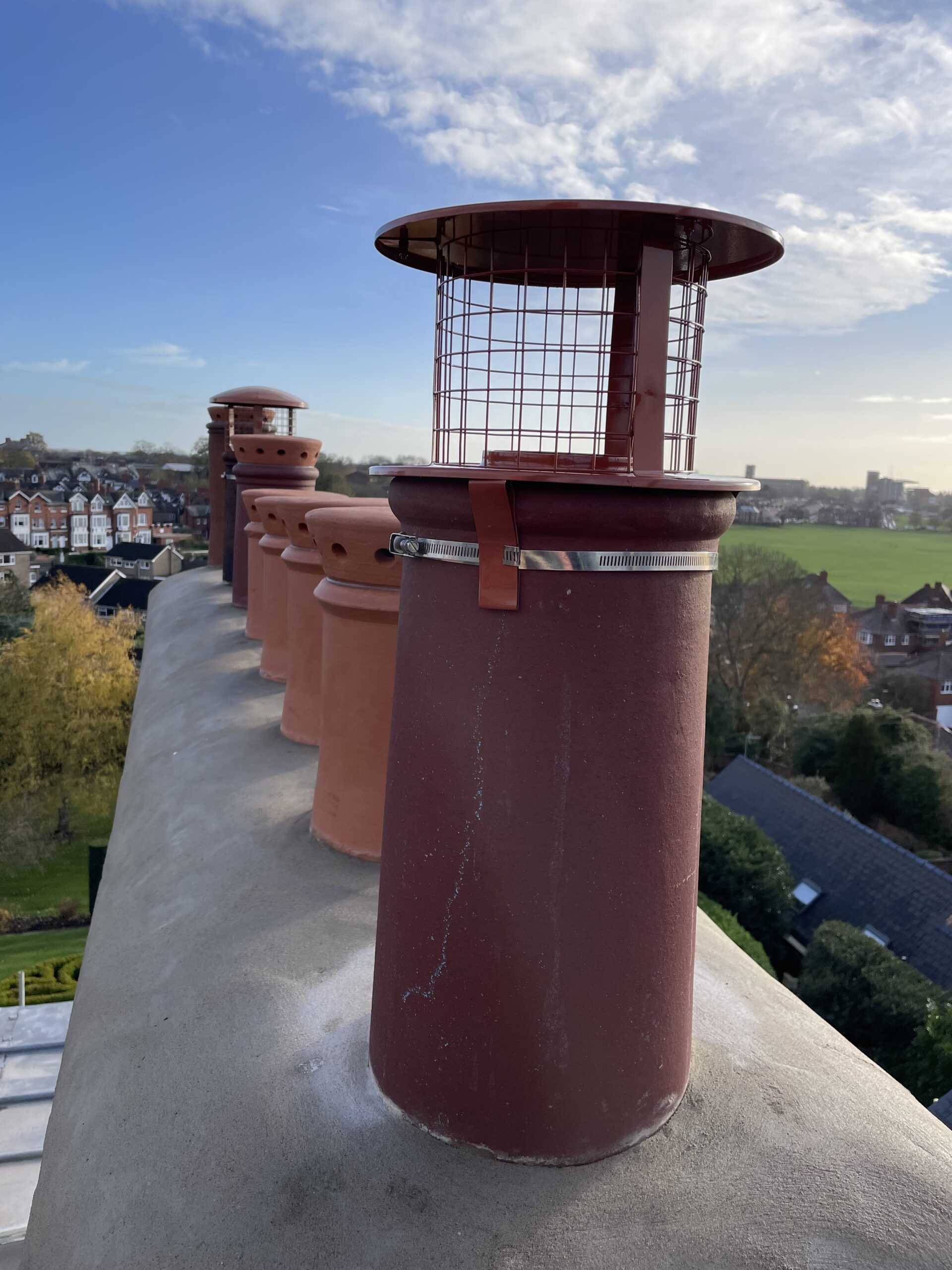
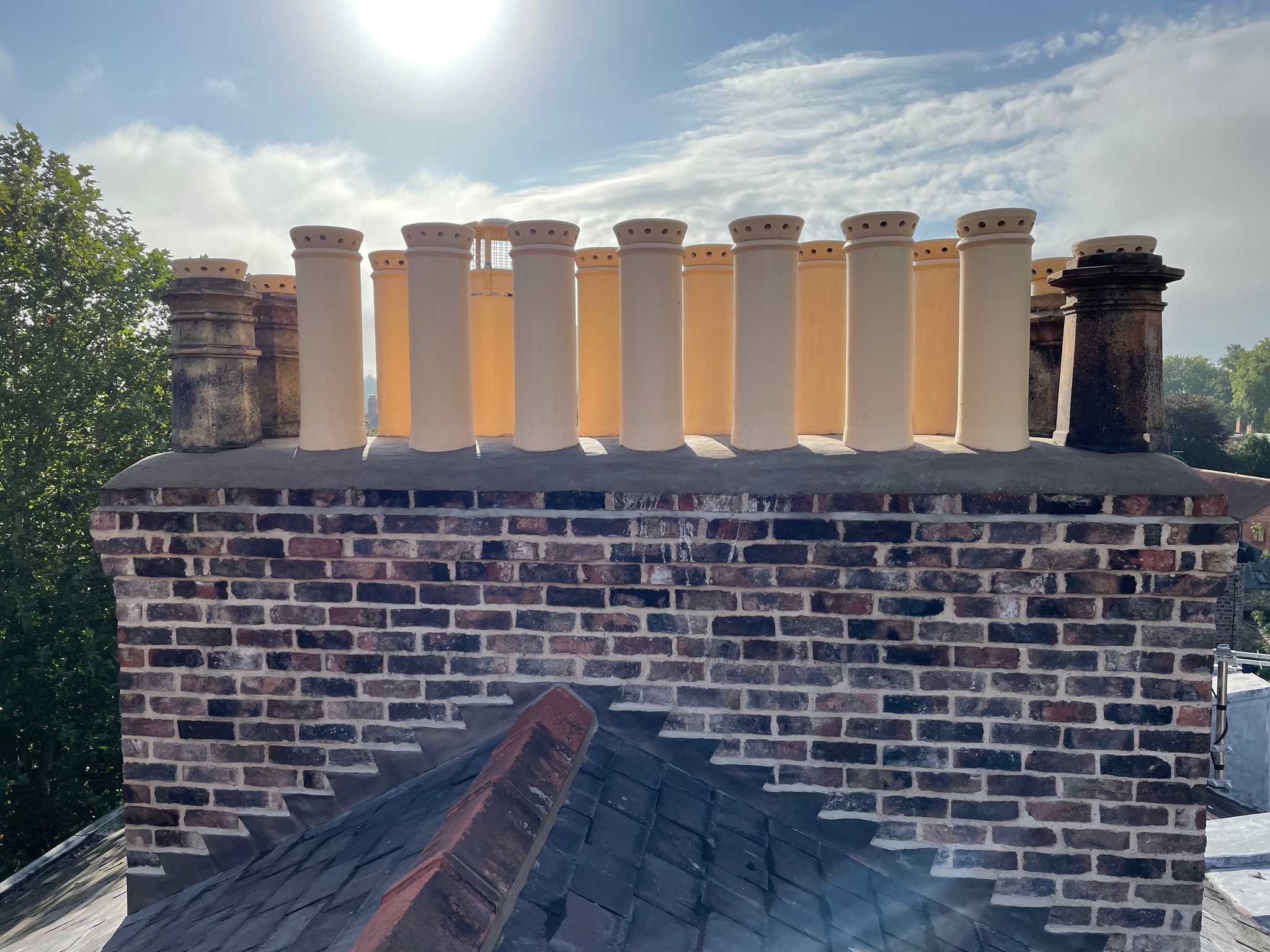 A roof-level view showing the chimney pot, terminal and available fixing area.
Main Components
The route from appliance to terminal
Domestic chimney systems vary considerably, but most contain the same basic elements. Some use an existing masonry flue, while others include a flexible stainless-steel liner or a factory-made insulated chimney system.
- Fireplace, stove or combustion appliance
- Connecting flue pipe or appliance outlet
- Masonry chimney or factory-made chimney system
- Clay, pumice, concrete or metal flue liner
- Chimney stack above the roof
- Flaunching around the chimney pots
- Chimney pot or liner outlet
- Chimney cowl, rain cap or specialist terminal
Component by Component
Chimney pot, flue, liner and cowl explained
These terms are often used interchangeably, but each describes a different part of the chimney. Understanding the distinction helps when measuring, diagnosing a fault or ordering a replacement chimney cowl.
Chimney stack
The masonry structure projecting above the roof. A single stack may contain one flue or several separate flues serving different fireplaces.
Flue
The internal passage through which smoke and combustion gases travel from the appliance to the atmosphere.
What is a flue?Flue liner
A continuous internal lining that contains combustion gases and protects the surrounding chimney structure.
Flexible liner terminalsChimney pot
The clay, concrete or metal section projecting above the chimney stack. Many strap-fixed cowls attach directly to the pot.
Choosing for a chimney potFlaunching
The sloping mortar surrounding the base of the chimney pots. It sheds water and helps secure the pots within the stack.
Chimney cowl
The final fitting above the pot or liner. Its purpose may include bird protection, rain reduction, liner termination or management of wind-related downdraught.
Airflow and Performance
How a chimney creates draught
A functioning chimney relies on an upward movement of air and combustion gases commonly called chimney draught. When gases inside the flue become warmer than the outside air, they become less dense and rise through the chimney.
As those gases rise, fresh air is drawn towards the appliance to support combustion. The difference in temperature and pressure between the flue and the outside atmosphere helps maintain this movement.
Draught is influenced by chimney height, flue size, gas temperature, appliance output, air supply, weather and the position of the chimney in relation to the roof and surrounding buildings.
A chimney cowl may help where wind disrupts the outlet, but it cannot automatically correct an undersized air supply, damaged liner, significant blockage or fundamentally unsuitable flue.
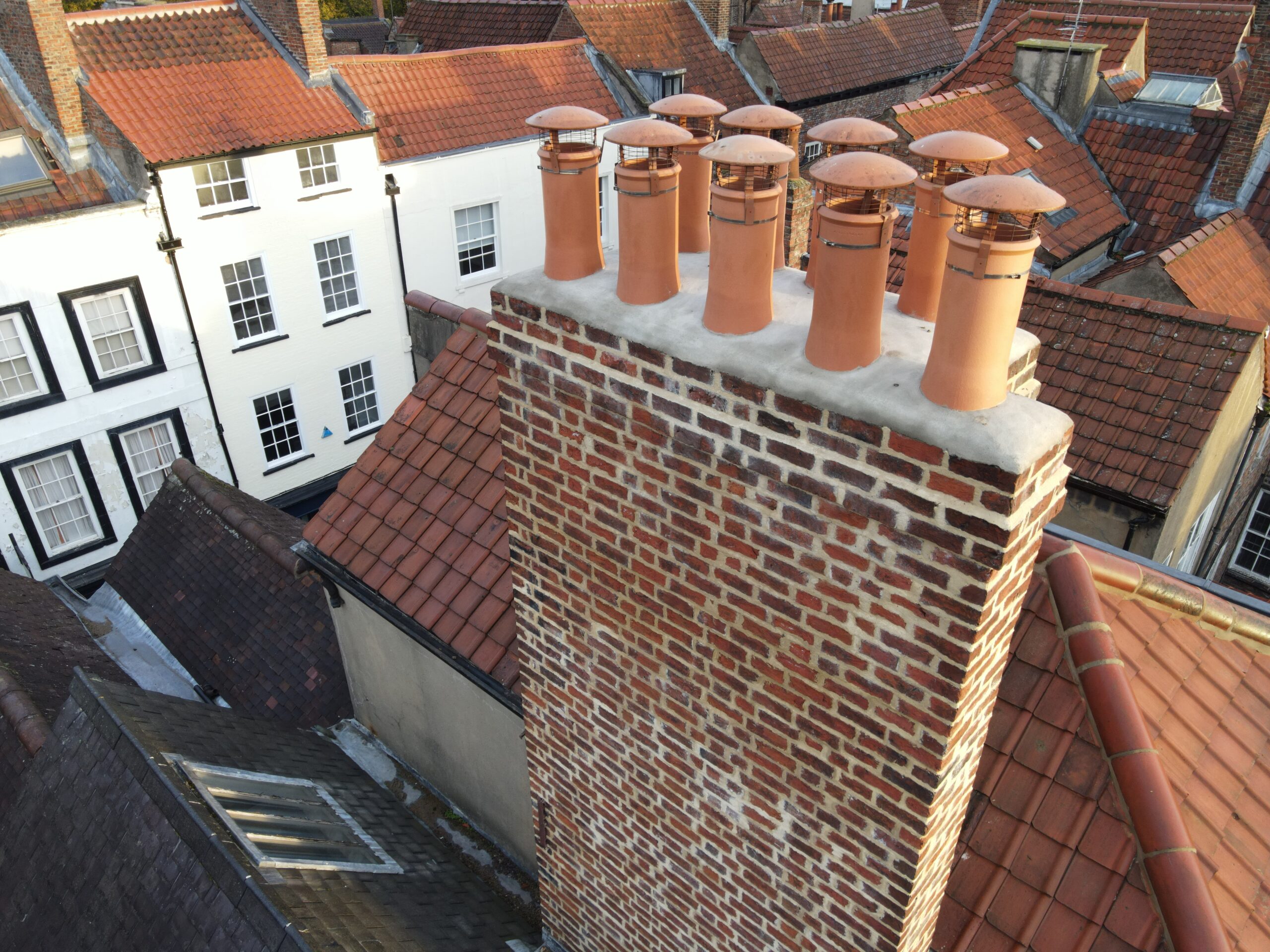 Roof shape, nearby structures and chimney position can influence pressure around a flue outlet.
Combustion begins
Fuel burns inside the appliance and produces heat, smoke and combustion gases.
Gases enter the flue
Warm gases pass from the appliance into the connecting pipe and chimney flue.
Warm gases rise
The temperature difference between the flue gases and outside air creates upward movement.
Air enters the room
Replacement air is drawn towards the appliance to support continued combustion.
The outlet meets the wind
Wind passing over the roof affects pressure immediately around the chimney terminal.
Gases discharge safely
The terminal allows combustion products to leave the flue and disperse into the atmosphere.
Performance Factors
What affects chimney performance?
Before assuming that the existing chimney cowl is responsible for poor performance, consider the complete system. Several faults can create similar symptoms, including smoke entering the room, slow ignition, weak draw or excessive condensation.
Chimney height
Taller chimneys usually create a stronger pressure difference, although excessive height and heat loss can introduce other issues.
Flue diameter
A flue that is too small may restrict discharge, while an oversized flue can cool gases too quickly and weaken draught.
Flue temperature
A cold chimney may be slow to establish an upward flow, particularly during initial lighting.
Room ventilation
The appliance needs sufficient combustion air. Extractor fans and tightly sealed rooms can alter pressure within the building.
Flue condition
Soot, tar, nesting material, displaced liners and masonry defects can obstruct or disrupt the flue.
Local wind conditions
Roof ridges, taller neighbouring buildings, trees and changes in ground level can create turbulence around the outlet.
Purpose and Function
What does a chimney cowl actually do?
A chimney cowl can perform one or several functions, depending on its design. Some products are relatively simple guards or rain covers, while others are engineered to alter airflow around the chimney outlet.
Not every chimney cowl is intended to improve draught. A bird guard may primarily prevent animal entry, while a liner terminal may principally secure and weather the top of a flexible liner. Anti-downdraught products are designed for a different purpose again.
This is why the name of the product alone is not enough. Check the manufacturer’s description, stated fuel compatibility, fitting range and intended use before making a selection.
Reduce bird entry
A suitable bird guard can deter nesting birds and prevent larger debris from entering the chimney.
Bird guard guideLimit direct rain
A hooded or covered design can reduce the amount of rainfall falling directly into an open flue.
Rain cap guideManage downdraught
A specialist design may help reduce adverse pressure caused by wind passing around the chimney outlet.
Downdraught guideTerminate a flue liner
Push-fit, screw-fit and pot-hanging products can connect to or support a flexible chimney liner.
Liner cowl guideVentilate an unused flue
A ventilated cap can reduce rain and debris while maintaining airflow through a redundant chimney.
Disused flue guideProtect the flue outlet
A correctly selected fitting can provide a durable and secure termination above the chimney pot or liner.
Original Installation Photography
Real UK chimney cowl installations
Chimney pots and roof arrangements vary considerably. The images below demonstrate why dimensions, pot condition, flue layout and safe access should all be considered before installation.
 A traditional multi-flue stack fitted with several different terminal arrangements.
 Roof pitch and access must be considered before fitting.
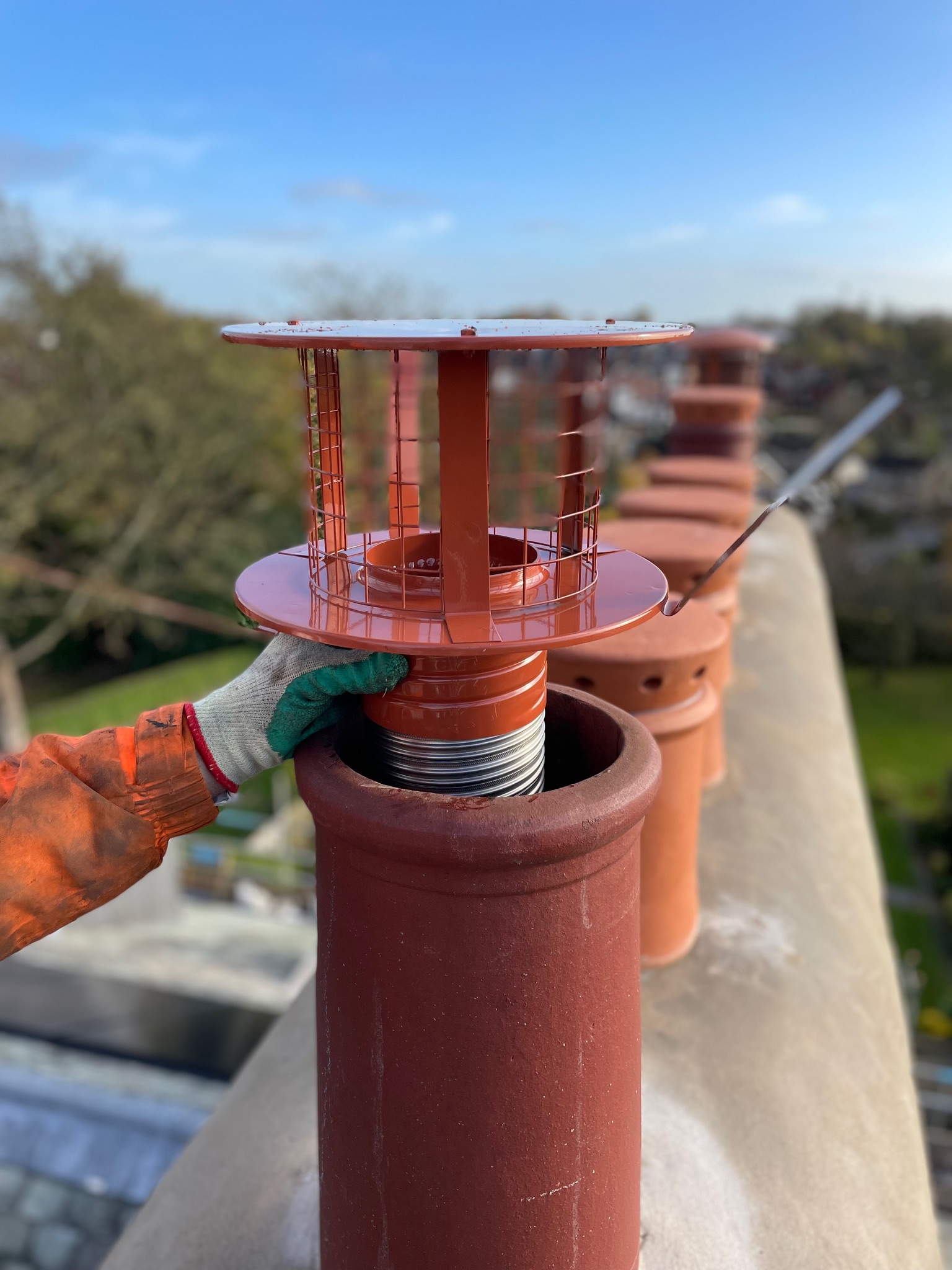 The roof and stack should be inspected alongside the terminal.
 Pot type and dimensions determine the appropriate fixing.
 The chimney cowl is one component in the complete appliance and flue system.
Avoiding the Wrong Solution
Common misconceptions about chimney cowls
“Every chimney needs a cowl”
Not necessarily. Some chimneys perform correctly with an open pot, while others require a specific terminal for the appliance or flue arrangement.
“Any cowl will stop downdraught”
Standard bird guards and rain caps are not automatically anti-downdraught products. The cause of smoke blowback should be investigated first.
“A rain cap cures chimney damp”
It may reduce direct rainfall, but it will not repair defective lead flashing, cracked flaunching, porous masonry or internal condensation.
“If it fits, it is suitable”
Physical dimensions are only part of the decision. Fuel, appliance, outlet area, temperature and fixing method must also be checked.
“More mesh means more protection”
Fine or restricted mesh may accumulate soot and debris. The guard must maintain an appropriate open area for the appliance and fuel.
“An unused chimney should be sealed”
Fully sealing a redundant flue can trap moisture. Controlled ventilation is usually preferable.
Step-by-Step Buying Guide
How to choose the correct chimney cowl
Choosing the correct chimney cowl should be a structured process. Start with the appliance and fuel, identify the chimney arrangement, diagnose the problem, measure the pot or liner and then confirm that the proposed product is suitable for the complete installation.
This approach helps avoid common mistakes such as fitting a ventilated cap to an active solid-fuel flue, using a restrictive bird guard above an open fire or ordering a liner cowl that does not match the actual flexible-liner diameter.
The six stages below provide a practical framework for homeowners, installers, chimney sweeps and property professionals.
Identify the appliance and fuel
Confirm what the chimney serves before considering the shape, finish or cost of the cowl.
- Wood-burning stove
- Multi-fuel stove
- Open fire
- Gas appliance
- Oil appliance
- Biomass appliance
- Unused or redundant flue
Confirm the chimney and flue arrangement
Determine whether the appliance discharges through an existing masonry flue, a flexible liner or a factory-made chimney system.
- Unlined masonry chimney
- Clay or pumice liner
- Flexible stainless-steel liner
- Rigid metal flue system
- Chimney pot termination
- Pot-hanging liner arrangement
Identify the problem to be solved
A chimney cowl should have a defined purpose. Different designs solve different problems.
- Birds or nesting material
- Direct rain entry
- Wind-related downdraught
- Smoke blowback
- Poor or unstable draw
- Flexible-liner termination
- Ventilation of an unused chimney
Record the pot or liner dimensions
Measure the actual fixing point rather than relying only on the nominal appliance or liner size.
- Outside diameter of a round pot
- Width and depth of a square pot
- Pot height and taper
- Flexible-liner diameter
- Available fixing area
- Condition of the pot and flaunching
Confirm compatibility and outlet area
The product information should confirm the intended appliance, fuel, flue arrangement and fitting range.
- Fuel and appliance suitability
- Maximum operating temperature
- Stated pot or liner fitting range
- Required free outlet area
- Material and corrosion resistance
- Manufacturer’s installation instructions
Select the fixing and installation method
The chosen cowl must be securely fixed and safely accessed without damaging the pot, stack or roof.
- Strap-fix around a chimney pot
- Push-fit into a flexible liner
- Screw-fit to a liner
- Pot-hanging liner support
- Bolt-down or flange fixing
- Suitable roof-access system
Step 1: Appliance Compatibility
Choose a chimney cowl by appliance type
The appliance is the most important starting point because it determines the temperature, combustion products, airflow requirement and type of flue termination required.
Never assume that a cowl suitable for one fuel can be transferred to another. In particular, gas and oil terminals should only be changed after confirming compatibility with the appliance and flue system.
Wood-burning stove
Usually requires a high-temperature solid-fuel-compatible terminal with sufficient open area and suitable liner or pot fixing.
View the wood-burner guide →Multi-fuel stove
Check that the cowl is suitable for the range of fuels permitted by the appliance and for the expected flue-gas temperature.
Compare solid-fuel cowls →Open fire
Open fires generally rely on a large volume of airflow, so an unnecessarily restrictive terminal can affect performance.
View open-fire guidance →Gas appliance
The terminal must be approved or suitable for the specific appliance and flue arrangement. Physical fit is not sufficient.
Read the gas cowl guide →Oil or biomass appliance
These systems can have specific flue and terminal requirements. Refer to the appliance manufacturer and a suitably competent installer.
Unused chimney
A redundant flue normally benefits from controlled ventilation rather than a fully sealed cap.
Read the disused-flue guide →Step 2: Chimney and Liner Arrangement
Is the chimney lined or unlined?
The correct chimney cowl depends partly on what sits beneath the chimney pot. A masonry flue terminating through a clay pot may need a strap-fixed cowl, while a flexible liner often requires a dedicated push-fit, screw-fit or pot-hanging terminal.
Unlined masonry flue
The chimney pot opens directly into the masonry flue. The selected cowl normally fixes to the chimney pot and must remain suitable for the appliance and fuel.
Check:
- Pot outside dimensions
- Condition and stability of the pot
- Flue outlet area
- Appliance compatibility
Flexible liner within a chimney
A flexible stainless-steel liner runs through the masonry chimney and terminates near or above the chimney pot.
Common options:
- Push-fit liner cowl
- Screw-fit liner cowl
- Pot-hanging cowl
- Top-plate and terminal arrangement
Factory-made metal chimney
Twin-wall and other system chimneys normally require a terminal supplied or approved as part of the manufacturer’s tested system.
Do not:
- Mix incompatible manufacturers
- Fit a masonry-pot cowl without approval
- Restrict the designed outlet
- Alter the system terminal casually
Redundant or disused chimney
Where no appliance is connected, the objective is often to reduce water and debris while preserving airflow through the flue.
Consider:
- Ventilated chimney cap
- Bird guard with weather cover
- Low-level ventilation
- Ongoing damp monitoring
Step 3: Diagnose the Requirement
What problem should the chimney cowl solve?
The same symptoms can have several different causes. For example, water near a chimney breast may come from direct rainfall, failed flashing, porous masonry or condensation. Fitting a rain cap without diagnosis may leave the real defect unresolved.
Birds entering or nesting
Consider a suitable bird guard with the correct mesh size and sufficient open area for the appliance.
Choose a bird guard → RainDirect rain entering the flue
A rain cap may reduce direct water entry, but inspect the flashing, masonry and flaunching as well.
Diagnose rain ingress → WindSmoke blowing back into the room
An anti-downdraught cowl may help if wind pressure is the cause, but chimney height and ventilation should also be checked.
Explore downdraught solutions → DrawWeak or unstable chimney draught
Inspect for blockages, cold-flue effects, leakage, insufficient air supply and unsuitable flue dimensions.
Diagnose poor draw → DampCondensation or internal moisture
A ventilated arrangement may help a redundant flue, but active-flue condensation can indicate low gas temperatures or an unsuitable liner.
Investigate condensation → Unused FlueProtecting a redundant chimney
Use a ventilated cap or guard rather than fully sealing the chimney and trapping moisture.
Read the capping guide →Step 4: Fixing Method
How will the chimney cowl be secured?
A correctly selected chimney cowl still needs an appropriate fixing. The pot shape, liner arrangement, available fixing area and manufacturer’s instructions determine which method should be used.
| Fixing method | Typical application | Main checks | Guide |
|---|---|---|---|
| Strap-fix | Round or square chimney pots where straps tighten around the outside of the pot. | Pot dimensions, sound surface, strap length and even tightening. | Fixings explained |
| Push-fit | A dedicated fitting inserted into the top of a compatible flexible flue liner. | Exact liner diameter, engagement depth and manufacturer compatibility. | Liner cowl guide |
| Screw-fit | A specialist liner terminal fixed mechanically to the flexible liner. | Liner size, screw position, material compatibility and secure connection. | Liner terminal guide |
| Pot-hanging | A terminal that supports a flexible liner while sitting on or within a chimney pot. | Pot dimensions, liner weight, support arrangement and weathering. | Pot-hanger guide |
| Bolt-down or flange | Specialist terminals fixed to a prepared top plate, slab or proprietary base. | Substrate strength, weather seal, corrosion resistance and fixing specification. | Installation guide |
| System connection | Factory-made insulated chimney systems using a proprietary locking or clamp connection. | Manufacturer, product range, diameter and system certification. | Follow the system manufacturer |
The Complete UK Buyer’s Guide
Types of chimney cowl explained
Although the term chimney cowl is often used to describe every product fitted to the top of a chimney pot, there are dozens of specialist designs developed for different fuels, weather conditions and chimney arrangements.
Some cowls are intended purely to prevent birds entering a flue. Others reduce rain penetration, improve chimney draw, support flexible liners or help combat severe wind-related downdraught.
Selecting the correct design is considerably more important than simply choosing one that fits the chimney pot.
Below is a comprehensive overview of the principal chimney cowl types found throughout the United Kingdom.
Bird Guard Chimney Cowls
Designed to prevent birds, nesting material and larger debris entering active chimneys whilst maintaining adequate airflow.
- Solid fuel appliances
- Wood burners
- Multi-fuel stoves
- Open fires
- Various mesh sizes
Rain Caps
Rain caps reduce direct rainfall entering the flue while allowing combustion gases to escape safely.
- Rain reduction
- Weather protection
- Open chimneys
- Lined flues
- Various fixing methods
Anti Downdraught Cowls
Specially engineered designs that reduce the effects of turbulent wind and minimise smoke blowback.
- Windy locations
- Smoke blowback
- Poor chimney draw
- Roof turbulence
- Exposed properties
Liner Cowls
Purpose-designed terminals for stainless steel flexible flue liners.
- Push fit
- Screw fit
- Pot hanging
- Top plate systems
- Solid fuel compatible
Ventilated Chimney Caps
Designed for disused chimneys where airflow remains important to reduce condensation and damp.
- Unused flues
- Ventilation
- Rain protection
- Bird protection
- Moisture control
Specialist Terminals
Industrial and commercial chimney terminals for larger buildings and specialist flue systems.
- Commercial plant
- Apartment blocks
- Industrial systems
- Large diameter flues
- Bespoke terminals
Not Sure Which Product You Need?
Choose a chimney cowl by the problem you’re experiencing
Many homeowners search for the symptom rather than the product. If you’re unsure which chimney cowl is appropriate, start by identifying the issue below.
Birds in chimney
Prevent nesting birds and debris entering the flue.
Rain entering chimney
Reduce direct rainwater entering active flues.
Downdraught
Combat smoke blowback caused by turbulent winds.
Poor chimney draw
Diagnose weak chimney performance.
Condensation
Understand moisture forming within chimneys.
Unused chimney
Protect disused chimneys whilst maintaining ventilation.
Materials and Service Life
Chimney cowl materials and finishes
The material used to manufacture a chimney cowl affects its appearance, corrosion resistance, maintenance requirements and expected service life. The best option depends on the appliance, exposure, local environment and the quality of the individual product.
A lightly exposed inland chimney may perform satisfactorily with a well-made galvanised product, while a coastal property or highly exposed roof may justify stainless steel and upgraded fixings. Traditional clay terminals may be visually appropriate for heritage buildings but serve a different purpose from engineered metal cowls.
Material alone does not determine suitability. The design, metal thickness, weld quality, mesh area, fixing system and stated fuel compatibility are equally important.

Stainless steel
Stainless steel offers strong corrosion resistance and is widely used for solid-fuel liner terminals, rotating cowls, rain caps and premium bird guards.
- Good corrosion resistance
- Suitable for many exposed locations
- Available in several stainless grades
- Often used with flexible flue liners
- Clean modern appearance
Galvanised steel
Galvanised steel is protected by a zinc coating and is commonly used for practical, cost-effective chimney guards and terminals.
- Generally lower initial cost
- Suitable for many inland properties
- Available in painted finishes
- Can corrode if the coating is damaged
- Fixings should also resist corrosion

Powder-coated metal
Powder coating provides a coloured decorative layer over a metal substrate, commonly in black, terracotta or buff finishes.
- Matches traditional chimney pots
- Available in several colours
- Coating quality varies by product
- Damage may expose the metal below
- Inspect periodically for deterioration

Terracotta-finish metal
Many modern metal products are finished in terracotta to blend visually with traditional clay chimney pots.
- Traditional appearance
- Modern metal construction beneath
- Popular on residential properties
- Available for solid-fuel systems
- Finish should be checked over time
Clay and ceramic terminals
Clay pepper pots and decorative terminals are often selected for traditional buildings, conservation settings and redundant flues.
- Traditional visual character
- Compatible with historic roofscapes
- Weather-resistant when sound
- Can crack through impact or frost
- Not interchangeable with every active-flue cowl
Materials for coastal locations
Salt-laden air, high winds and persistent moisture can accelerate corrosion. Material grade and fixings therefore deserve particular attention.
- Prefer corrosion-resistant materials
- Check the grade of stainless steel
- Avoid mixed-metal corrosion risks
- Use durable straps and fasteners
- Inspect exposed terminals regularly
Quick Comparison
Compare chimney cowl materials
The comparisons below are general. Product quality varies, and actual service life depends on material grade, coating quality, exposure, maintenance and installation.
| Material or finish | Corrosion resistance | Typical appearance | Best suited to | Main consideration |
|---|---|---|---|---|
| Stainless steel | Silver or polished metal | Solid fuel, liners, exposed locations and premium installations | Confirm stainless grade and fixing quality | |
| Galvanised steel | Metallic grey or coated | General domestic use in normal inland exposure | Cut edges and damaged coating may corrode | |
| Powder-coated steel | Black, terracotta, buff or custom colour | Visible residential installations and matching clay pots | Underlying metal depends on coating integrity | |
| Terracotta-finish metal | Traditional terracotta colour | Residential solid-fuel and liner installations | Finish quality and substrate vary | |
| Clay or ceramic | Traditional clay or glazed finish | Heritage settings, decorative pots and suitable redundant flues | Can crack through impact, frost or movement | |
| Aluminium | Light silver or coated | Selected gas, ventilation and lightweight applications | Not automatically suitable for high-temperature solid fuel |
Exposure and Corrosion
Why the location of the chimney matters
A chimney cowl is exposed to rain, frost, ultraviolet light, airborne pollution and repeated heating and cooling. On coastal properties, salt carried in the air can significantly accelerate corrosion.
Chimneys near the sea, on exposed hillsides or above tall buildings are also subjected to stronger wind loading. The body of the cowl, straps, bolts, screws and any rotating components should all be suitable for those conditions.
Mixed metals can introduce galvanic corrosion where dissimilar materials remain in contact in a wet environment. Using compatible fixings and following the manufacturer’s instructions helps reduce that risk.
Regular inspection remains important even where stainless steel is used. Dirt, soot deposits and seized moving parts can still affect performance.
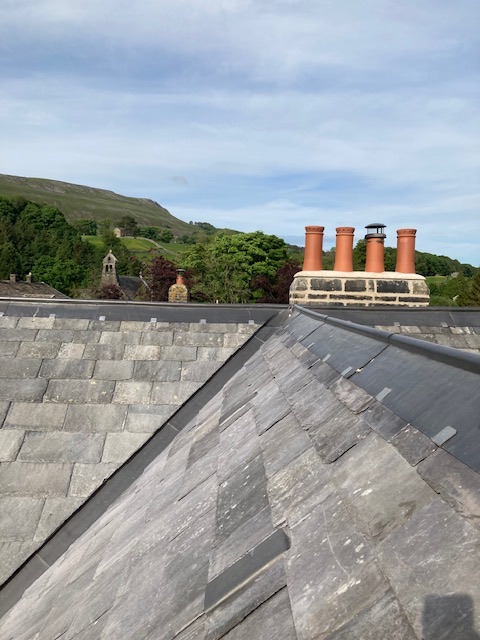 Material, fixings and maintenance should reflect the exposure of the building.
Expected Lifespan
How long should a chimney cowl last?
There is no fixed lifespan for every chimney cowl. A high-quality stainless product in a sheltered location may remain serviceable for many years, while a poorly coated steel cowl in coastal exposure may deteriorate much sooner.
Service life depends on the product design, material grade, thickness, welding, moving components, installation quality, maintenance and local conditions.
Material quality
Better-grade metals, durable coatings and robust welds generally resist exposure for longer.
Chimney exposure
Coastal salt, high winds, persistent rainfall and industrial pollution can shorten service life.
Fuel and deposits
Soot, tar and corrosive combustion products can accumulate on mesh, caps and moving components.
Installation quality
Loose straps, distorted components and incompatible fixings can lead to early failure.
Moving parts
Bearings and rotating assemblies require more inspection than a simple static terminal.
Ongoing maintenance
Routine chimney sweeping and roof-level inspection can identify corrosion or damage before failure.
Complete Comparison
Compare the main types of chimney cowl
Use this table to compare the general purpose of common chimney cowl designs. It does not replace product-specific guidance or confirmation of appliance compatibility.
| Cowl type | Main purpose | Bird protection | Rain reduction | Downdraught control | Typical fixing | Maintenance level |
|---|---|---|---|---|---|---|
| Bird guard | Reduce bird and debris entry | High | Model dependent | Low | Strap-fix or liner connection | Inspect mesh and soot deposits |
| Rain cap | Reduce direct rainfall | Guard dependent | High | Low | Strap, push-fit or flange | Check cover and fixings |
| Anti-downdraught cowl | Manage adverse wind pressure | Model dependent | Model dependent | Primary function | Usually strap-fixed | Check outlet and secure fixing |
| Spinning cowl | Use wind-driven rotation at the outlet | Design dependent | Usually covered | Selected sites | Pot or liner connection | Higher: inspect bearings and rotation |
| Liner cowl | Terminate a flexible flue liner | Design dependent | Usually good | Design dependent | Push-fit, screw-fit or pot-hanging | Check connection and deposits |
| Ventilated cap | Protect a redundant flue while retaining airflow | Usually good | Good | Not applicable | Strap, insert or mortar-fixed | Check ventilation remains clear |
| H terminal | Specialist pressure management | Not its main purpose | Arrangement dependent | Specialist use | Designed connection | Inspect joints and outlet condition |
| Clay pepper pot | Ventilation and traditional appearance | Opening dependent | Good | Low | Mortar or proprietary fixing | Inspect for cracks and movement |
Professional Installation
Installing a Chimney Cowl Correctly
A chimney cowl is only as effective as its installation. Selecting the correct model is the first step; ensuring it is securely fitted to a sound chimney, compatible with the appliance and installed safely is equally important. Poor installation can reduce performance, introduce safety risks and shorten the lifespan of the terminal.
Before fitting any chimney cowl, inspect the complete chimney system rather than simply the chimney pot. The condition of the masonry, flaunching, flashings, liner, appliance connection and surrounding roof should all be considered.
Many chimney problems attributed to the terminal are actually caused by blocked flues, damaged liners, leaking flashings, inadequate combustion air or poor appliance commissioning. A replacement cowl cannot compensate for underlying defects elsewhere within the system.
For wood-burning stoves and multi-fuel appliances, ensure the terminal has been specifically designed and tested for solid fuel use. Products intended for gas appliances or redundant flues must never be substituted simply because they appear to fit.
Best practice
Inspect the chimney from the fireplace to the terminal before deciding whether the existing cowl is actually responsible for poor performance.
Installation Methods
Common Chimney Cowl Fixing Systems
Different chimney pots require different fixing methods. Never force a cowl onto an incompatible chimney.
Strap Fixing
Adjustable stainless straps tighten around the outside of the chimney pot without drilling the masonry.
Bolt Fixing
Bolted fixings clamp directly to the pot and are commonly used on anti-downdraught terminals.
Push-Fit Liners
Designed specifically for flexible stainless steel liners and secured directly into the liner itself.
Pot Hanging Systems
Support the weight of a flexible liner whilst simultaneously terminating the chimney above the pot.
UK Regulations
Building Regulations & Approved Document J
All combustion appliances and associated flues should comply with the relevant Building Regulations applicable to the installation.
| Requirement | Why It Matters | Relevant Guidance |
|---|---|---|
| Combustion Air | Ensures sufficient oxygen reaches the appliance. | Approved Document J |
| Flue Termination | Correct discharge of combustion products. | Approved Document J |
| Chimney Height | Influences draw and smoke dispersion. | Approved Document J |
| Inspection Access | Allows sweeping and maintenance. | BS EN 15287 |
| Flexible Liners | Must terminate correctly using approved components. | BS EN 1856 |
Gas appliances
Gas appliance terminals must never be altered without confirming compatibility with the appliance manufacturer’s instructions and current Gas Safe requirements.
Avoid These Mistakes
Common Installation Problems
Many performance issues arise because the wrong terminal has been selected or fitted incorrectly.
Loose Fit
A terminal that is too large or too small may loosen during severe weather.
Excessive Restriction
Very fine mesh can become blocked by soot or tar when used on certain solid-fuel appliances.
Compatibility Errors
Products designed for gas appliances or ventilation must never be substituted for solid fuel installations.
Poor Material Choice
Coastal properties may require higher grades of stainless steel for long-term durability.
Working at Height
Roof work should only be undertaken using appropriate access equipment and weather conditions.
Misdiagnosis
Replacing the cowl will not solve defects caused by damaged liners, leaking masonry or poor appliance installation.
Technical Framework
Standards and guidance relevant to chimney cowl installation
The requirements applying to a chimney cowl depend on the appliance, fuel, flue construction, product specification and location within the UK. Product instructions and the complete chimney-system design should always take priority over a generic fitting assumption.
A chimney cowl is a component within a larger combustion and flue system. Its suitability cannot be assessed solely by measuring the chimney pot. The terminal should be compatible with the appliance, temperature class, corrosion class, flue diameter and intended operating conditions.
Several standards may be relevant when a chimney is designed, relined, altered or commissioned. The exact edition and application should be confirmed for the project rather than relying on a historic reference.
Approved Document J
Provides statutory guidance in England on combustion appliances, air supply, flues, chimneys and the discharge of combustion products.
View Approved Document J ↗BS EN 1443
Sets out general requirements and basic performance criteria for chimneys, liners, connecting pipes, components and accessories.
View the BSI standard page ↗BS EN 15287-1
Addresses the design, installation and commissioning of chimneys and connecting flue pipes for non-room-sealed combustion appliances.
View the BSI standard page ↗BS EN 15287-2
Covers design, installation and commissioning considerations for chimneys serving room-sealed combustion appliances.
View the BSI standard page ↗BS EN 1856-2
Specifies performance characteristics for rigid and flexible metal flue liners, connecting flue pipes and associated fittings.
View the BSI project page ↗Gas appliance flueing
Gas appliance chimney and terminal work requires appliance-specific assessment and should be undertaken by an appropriately registered engineer.
View the BSI project page ↗Standards do not replace product instructions
Use the manufacturer’s current instructions for the appliance, liner, chimney system and chimney cowl. Where requirements conflict or the arrangement is unclear, obtain advice from a competent installer or chimney specialist before work begins.
Appliance Compatibility
Which chimney cowl suits which appliance?
This matrix is a general selection aid. A green indication does not mean every product within that category is suitable. Always check the individual product specification.
| Cowl type | Wood burner | Multi-fuel stove | Open fire | Gas appliance | Flexible liner | Unused flue |
|---|---|---|---|---|---|---|
| Solid-fuel bird guard | Check product | Check product | Often suitable | Not assumed | With liner fitting | Possible |
| Rain cap | Check restriction | Check restriction | Model dependent | Not assumed | Model dependent | Often suitable |
| Anti-downdraught cowl | Solid-fuel model | Solid-fuel model | Often considered | Specialist only | With suitable adaptor | Usually unnecessary |
| Spinning chimney cowl | Check approval | Check approval | Site dependent | Specialist only | Correct connection | Usually unnecessary |
| Push-fit liner cowl | Where specified | Where specified | Usually not applicable | Not assumed | Primary use | Not normally required |
| Pot-hanging liner cowl | Where designed | Where designed | Usually not applicable | Not assumed | Primary use | Not normally required |
| Ventilated chimney cap | Not for active flue | Not for active flue | Not while in use | Not while in use | Not for active liner | Primary use |
| Clay pepper pot | Not assumed | Not assumed | Arrangement dependent | Specialist assessment | Not a liner connector | Common application |
Solid-Fuel Appliances
Chimney cowls for wood burners and open fires
Wood-burning stoves and open fires both burn solid fuel, but they do not necessarily require the same chimney cowl. A stove normally operates as a more controlled appliance connected to a defined flue, whereas an open fire draws a much larger volume of room air through the fireplace opening.
A restrictive guard or undersized terminal can affect the performance of either system. Mesh, weather covers and internal baffles should leave sufficient open area for the intended application.
For a flexible-liner stove installation, the chimney cowl may also form the mechanical connection and weathered termination of the liner. An open fire using a masonry flue is more likely to use a pot-mounted guard or anti-downdraught design.
The chimney cowl should be selected as part of the complete stove, liner and chimney arrangement.Typical considerations
- Flexible-liner diameter and designation
- Solid-fuel and temperature compatibility
- Push-fit, screw-fit or pot-hanging connection
- Appropriate weather protection
- Accessible cleaning and sweeping arrangement
- Risk of soot accumulation on mesh
Typical considerations
- Large airflow demand through the fireplace
- Minimum restriction at the terminal
- Bird protection without fine obstructive mesh
- Chimney height and local wind pressure
- Smoke-spillage testing after alterations
- Condition and dimensions of the chimney pot
Flexible Flue Liners
Terminating a flexible liner with a chimney cowl
A flexible-liner terminal should match the actual liner diameter and form part of a secure, weather-resistant and maintainable installation.
Identify the liner
Confirm its internal diameter, material, designation, orientation and suitability for the connected appliance.
Confirm the support method
Determine whether the liner is supported using a top plate, pot-hanging cowl or another proprietary system.
Select the correct connection
Push-fit, screw-fit and pot-hanging cowls use different methods and are not automatically interchangeable.
Weather the chimney top
Rain should be directed away from the liner and chimney while the flue outlet remains appropriately open.
Maintain sweeping access
The terminal arrangement should allow the flue to be inspected, cleaned and maintained without avoidable damage.
Before Installation
Chimney cowl inspection checklist
A roof-level inspection should consider more than the dimensions of the chimney pot. Defects in the stack, flaunching, flashing or liner may need attention before a new chimney cowl is installed.
Chimney pot
- Check for cracks and spalling
- Confirm the pot is stable
- Measure the outside dimensions
- Record taper and decorative profiles
- Check sufficient fixing area remains
Flaunching
- Look for open cracks
- Check adhesion around the pot
- Identify ponding or poor falls
- Inspect for loose sections
- Check previous patch repairs
Masonry stack
- Check pointing and mortar joints
- Look for displaced bricks or stone
- Identify sulphate or frost damage
- Check leaning or instability
- Review redundant flue openings
Lead flashing
- Inspect cover and step flashings
- Check back-gutter details
- Look for splits and displacement
- Check mortar chase security
- Separate flashing leaks from cowl leaks
Flue and liner
- Confirm whether a liner is present
- Record the liner diameter
- Inspect the exposed liner end
- Check support and connection
- Look for soot, tar or nesting material
Roof and access
- Assess roof pitch and condition
- Identify fragile coverings
- Check edge and fall risks
- Plan suitable access equipment
- Consider weather and wind exposure
Do not attach a new cowl to a defective chimney pot
Tightening straps or clamps around a cracked, loose or heavily weathered chimney pot can worsen the defect. Repair or replace unsound components before fitting the chimney cowl.
Professional Assessment
When should a professional fit the chimney cowl?
Professional installation is appropriate where roof access is difficult, the chimney is damaged, the terminal serves a live appliance or the cause of the problem is uncertain.
For solid-fuel appliances, a competent person familiar with flue design and commissioning can assess whether the chimney cowl is compatible with the appliance and whether smoke testing or other checks are required after installation.
Gas appliance work should be referred to a suitably registered gas engineer. Oil systems and specialist biomass appliances similarly require appropriately competent assessment.
Listed buildings and conservation areas may also require additional consideration where the proposed chimney cowl materially alters the appearance of a prominent chimney stack.
Maintenance & Inspection
Looking after your chimney cowl for long-term performance
A chimney cowl is exposed to wind, rain, frost, soot, acidic condensates and temperature extremes throughout the year. Like every external building component, it should be inspected periodically to ensure it remains secure, free from obstruction and suitable for the appliance it serves.
Although many stainless steel chimney cowls provide decades of reliable service, their performance depends upon correct installation, regular chimney sweeping and routine visual inspection.
Meshes may gradually become restricted by soot or creosote, rotating bearings can seize if neglected, fixings can loosen during severe weather, while birds and nesting material can obstruct terminals that have not been maintained.
Fortunately, most problems develop gradually and can usually be identified during routine chimney inspections before they affect appliance performance or safety.
Inspect after severe weather
High winds can loosen straps, rotate terminals beyond their normal position or damage ageing chimney pots. After major storms, visually inspect the stack from ground level and arrange a closer inspection if anything appears unusual.
Storm inspection guideKeep mesh clear
Bird guards and spark arrestors should remain clear. Heavy soot deposits or bird nesting material can gradually reduce the free area of the outlet and adversely affect chimney performance.
Cleaning adviceCheck all fixings
Strap fixings, jubilee clips, screws and liner connections should remain tight. Any movement between the terminal and chimney pot should be investigated before continued use.
Fixing systems explainedRoutine maintenance costs very little
Most chimney terminals require little more than periodic inspection during sweeping and occasional cleaning. Replacing a damaged fixing or clearing accumulated debris is generally considerably less expensive than repairing a damaged chimney, replacing a seized rotating cowl or dealing with water ingress caused by a failed terminal.
Useful Resources
Further guidance on inspection and maintenance
Continue your research using our detailed maintenance guides together with recognised industry advice covering chimney sweeping, appliance servicing and safe roof access.
Authoritative External Resources
Official guidance and recognised industry organisations
Installation, servicing and chimney maintenance should always follow recognised UK guidance together with the appliance manufacturer’s instructions.
Approved Document J
Government guidance covering combustion appliances, chimneys, flues and ventilation requirements.
Read guidance ↗ HSEWorking on Roofs
Health and Safety Executive advice covering safe roof access, ladders, edge protection and working at height.
Visit HSE ↗ HETASSolid Fuel Guidance
Information covering solid fuel appliances, chimney systems, installers and maintenance.
Visit HETAS ↗ NACSNational Association of Chimney Sweeps
Advice regarding chimney sweeping, inspection intervals and safe operation of solid fuel appliances.
Visit NACS ↗ OFTECOil Heating Guidance
Official technical guidance for oil-fired appliances, chimneys and servicing.
Visit OFTEC ↗Frequently Asked Questions
Chimney cowl questions answered
The answers below cover the most common questions about choosing, sizing, fitting and maintaining a chimney cowl. Product suitability still depends on the appliance, fuel, flue system and individual chimney arrangement.
Where a chimney serves a gas, oil, biomass or specialist appliance, consult the appliance instructions and an appropriately competent engineer before altering the terminal.
Buying and Selection
Choosing the right chimney cowl
Problem Solving
Can a chimney cowl solve common chimney problems?
Measurement and Fixing
Chimney cowl sizing questions
Appliance Compatibility
Chimney cowls for stoves, fires and gas appliances
Combustion appliance guidance
In England, consult Approved Document J together with the current appliance and chimney-system instructions.
Fitting and Safety
Chimney cowl installation questions
Inspection and Maintenance
Maintaining and replacing a chimney cowl
Ready to Choose?
Find the right chimney cowl for your property
Confirm the appliance, identify the chimney arrangement, measure the pot or liner and select a chimney cowl designed for the problem you need to solve.
Product Finder
Find the right chimney cowl for your installation
Begin with the appliance and the problem you are trying to solve. Every chimney cowl must also match the fuel, flue arrangement, dimensions and proposed fixing method.
Chimney cowls for stoves and solid-fuel appliances
Choose a solid-fuel-compatible chimney cowl that suits the chimney pot or flexible liner and maintains the required flue outlet.
Chimney cowls for downdraught and smoke blowback
An anti-downdraught chimney cowl may help where adverse wind pressure has been identified as the cause of smoke returning down the chimney.
Bird guard and rain cap chimney cowls
Select an appliance-compatible chimney cowl that deters birds, reduces direct rainfall and preserves the free outlet area required by the flue.
Push-fit, screw-fit and pot-hanging chimney cowls
Confirm the actual liner diameter and select a chimney cowl specifically designed for the flexible-liner system and its support arrangement.
Before You Buy
Six steps to selecting a chimney cowl
Follow the process in order. Selecting a chimney cowl by appearance or chimney-pot diameter alone can result in an unsuitable or excessively restrictive terminal.
Identify the appliance
Stove, open fire, gas appliance or redundant chimney.
Confirm the fuel
Wood, multi-fuel, gas, oil or no active appliance.
Diagnose the problem
Birds, rain, downdraught, liner support or ventilation.
Measure the chimney
Record pot shape, outside dimensions and liner diameter.
Check compatibility
Confirm the declared appliance, fuel and flue application.
Plan installation
Choose the fixing method and arrange safe roof access.
Shop by Category
Browse chimney cowls by type
Compare chimney cowls for chimney pots, flexible liners, downdraught, birds, rain, exposed sites and redundant flues.
Anti-Downdraught Cowls
Chimney cowls for diagnosed wind-related smoke and downdraught problems.
Browse anti-downdraught cowls →Bird Guard Cowls
Help prevent bird entry while preserving a suitable flue outlet.
Browse bird guard cowls →Spinning Cowls
Rotating chimney cowl products for selected wind-affected sites.
Browse spinning cowls →Chimney Liner Cowls
Push-fit, screw-fit and supporting flexible-liner terminals.
Browse chimney liner cowls →Chimney Cappers
Ventilated chimney caps for redundant and disused flues.
Browse chimney cappers →Installation Packs
Combined components for selected stove and liner installations.
Browse installation packs →Pepper Pot Terminals
Traditional clay chimney terminals for suitable applications.
Browse pepper pot terminals →All Chimney Cowls
View guards, terminals, chimney caps and liner accessories.
Shop the complete range →Final Selection Advice
Choosing a chimney cowl: the essential principles
The correct chimney cowl is the product that safely matches the appliance, fuel, flue arrangement, chimney dimensions and intended purpose. It is not necessarily the most elaborate or expensive option.
Begin with the appliance. A chimney cowl for a wood-burning stove must be suitable for solid fuel and the flue system beneath it. A chimney cowl for an open fire should preserve sufficient outlet area, while a flexible-liner cowl must match the actual liner diameter.
Diagnose the problem before ordering. A bird guard chimney cowl helps reduce bird entry, a rain cap limits direct rainfall and an anti-downdraught chimney cowl is intended for particular wind-pressure conditions.
Measure carefully, inspect the chimney pot and plan safe installation. A chimney cowl should not be fitted to an unstable pot or used to disguise defects in the masonry, flaunching, flashings or flue.
The chimney cowl should then be checked during routine chimney sweeping. Where required, use The Stove Guys to find and book a local chimney sweep online .
Chimney Cowls UK
Find the right chimney cowl for your property
Browse chimney cowls by type, compare technical guidance or use the sizing calculator before ordering. For routine chimney maintenance, find and book a local chimney sweep through The Stove Guys.
About this chimney cowl guide
This cornerstone guide has been produced to help UK property owners, chimney sweeps, installers and building professionals understand chimney cowl selection, sizing, installation and maintenance.
The information is general and should be read alongside the chimney cowl manufacturer’s instructions, appliance guidance and any requirements applying to the installation.
Last reviewed: July 2026.