
Blog
Chimney Cowls & Caps: How to Measure, Choose & Fit (UK Guide)


Chimney Cowls and Caps: How to Measure, Choose and Fit the Right Product
Choose a chimney cowl by starting with the problem, appliance and flue—not simply the product that appears to fit the chimney pot. Compare anti-downdraught cowls, spinning cowls, rain caps, bird guards, chimney cappers and flexible-liner terminals for UK homes.
This guide explains how to estimate chimney-pot dimensions from ground level, what each principal cowl type is designed to do, how fuel and liner compatibility affect selection, and what should be checked before installation.
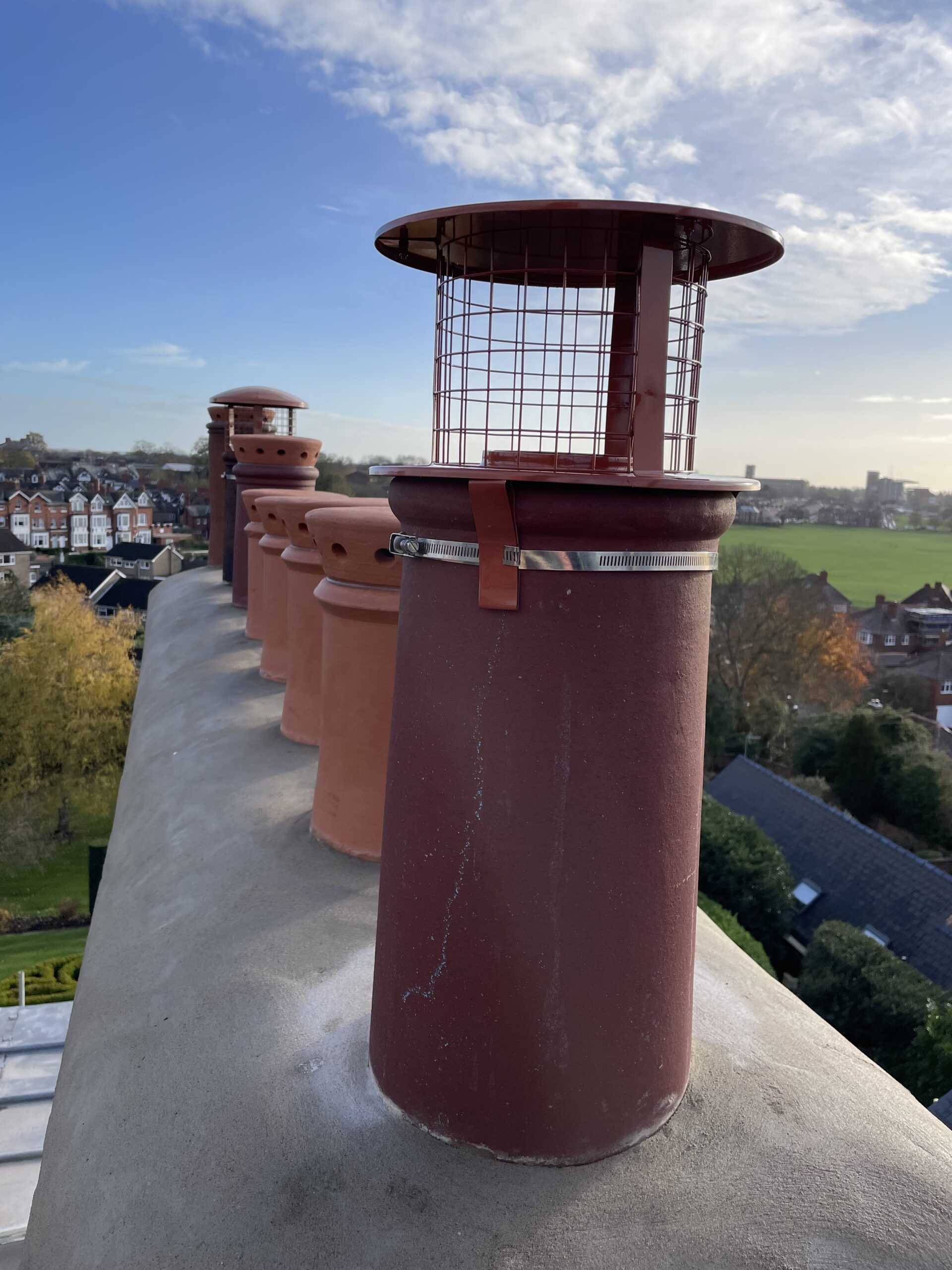
Which Chimney Cowl Do I Need?
Use an anti-downdraught cowl where adverse wind pressure has been diagnosed; a rain cap where direct rainfall is entering an otherwise sound flue; a fuel-compatible bird guard where nesting and debris are the concern; a correctly sized liner cowl or pot-hanger for a flexible flue liner; and a ventilating chimney capper for a redundant chimney.
A spinning cowl, H-cowl or spark guard is a more specialist choice. Before buying, confirm the appliance, fuel, chimney-pot size, liner diameter, flue condition and product suitability.
Choose the Cowl That Solves the Actual Problem
A chimney cowl is the terminal fitted above a chimney pot, flexible liner or flue outlet. Depending on its design, it may reduce direct rain, discourage birds, shelter the outlet from adverse wind pressure, support a flexible liner or ventilate a disused chimney.
The wrong product can introduce new problems. Restrictive mesh can collect soot, a loose rotary head can rattle, an unsuitable cap can reduce the effective outlet area, and an overtightened strap can crack an already weathered clay pot.
For more detailed technical guidance, use the Ultimate Guide to Chimney Cowls or work through the selector below.
How to Estimate Chimney-Pot Size from the Ground
The safest and most reliable method is a close measurement from suitable roof access. Where this is not immediately available, photographs and nearby masonry can help produce a preliminary estimate before a product is shortlisted.

Use Known Building Dimensions as a Visual Reference
A full brick close to the chimney pot can provide a useful visual scale. Modern UK bricks are commonly around 215 mm long, while older bricks can vary. Mortar joints, perspective and distance must also be considered.
This technique is useful for narrowing down likely product ranges, but it should not replace direct measurement where the fixing tolerance is tight or the pot has an unusual profile.
Read the Full Size GuideObtain a Clear Side-On Photograph
Stand far enough away to view the chimney stack without excessive upward distortion. Use optical zoom or binoculars rather than approaching the roof edge.
Identify a Known Reference Dimension
Use a nearby brick, slate, tile course or other repeatable building element. Do not assume every older brick is exactly 225 mm or every modern brick is exactly 215 mm.
Estimate the Outside Diameter
Compare the width of the straight pot body with the known reference. The fixing normally grips the body rather than the widest decorative roll or collar.
Allow for Wall Thickness
The clear internal opening is smaller than the outside diameter. Clay-pot wall thickness varies, so do not apply a fixed deduction without confirmation.
Record the Pot Profile
Note whether the pot is straight, tapered, roll-top, cannon, bishop, beehive, square or irregular. Profile can be as important as diameter for strap fixing.
Confirm Before Installation
Directly verify the dimensions and condition when safe close access becomes available. Do not force a marginally sized product onto a cracked or unsuitable pot.
What a Chimney Cowl Does: Updraught and Downdraught
Updraught
Warm combustion gases rise through the chimney. This upward movement draws replacement air toward the appliance and helps carry smoke safely outside.
Downdraught
Wind pressure or roof turbulence can act at the chimney outlet and force air downward. Symptoms can include smoke entering the room during gusts.
The Cowl’s Role
A suitable cowl can shelter or reshape airflow around the terminal. It cannot correct every obstruction, ventilation defect or incorrectly designed chimney.

Not Every Cowl Solves the Same Problem
Anti-downdraught cowls, spinning cowls, bird guards and rain caps may all be described as chimney cowls, but their construction and intended function differ.
Check the declared fuel suitability, fixing range, mesh, outlet clearance and maintenance requirements—not just the overall appearance.
Compare Chimney CowlsCompare the Main Types of Chimney Cowl
Anti-Downdraught Cowls
Designed to reduce the effect of adverse wind pressure and protect the outlet from direct gusts.
Shop anti-downdraught cowlsSpinning or Rotary Cowls
Wind-powered heads intended to create a pressure effect above the flue. Bearings and moving parts require inspection.
Shop spinning cowlsBird-Guard Cowls
Use mesh to discourage nesting and larger debris while maintaining a route for combustion gases.
Shop bird guardsRain Caps
Reduce direct rainfall entering the chimney without unnecessarily restricting the flue outlet.
Shop rain capsChimney Cappers
Weather-protect and ventilate redundant chimney flues. They are not generally intended for active solid-fuel appliances.
Shop chimney cappersLiner Cowls and Pot-Hangers
Terminate and support compatible flexible flue liners through a suitable chimney-pot arrangement.
View liner pot-hangersQuick Selector: Which Cowl Solves Which Problem?
| Observed issue | Likely product route | Check before buying | Useful link |
|---|---|---|---|
| Smoke blows back during gusts | Static anti-downdraught cowl or selected rotary product | Confirm wind-related downdraught rather than blockage or poor ventilation | Diagnose downdraught |
| Birds or nesting debris | Fuel-compatible bird guard | Mesh size, outlet area, fuel and cleaning access | Shop bird guards |
| Direct rainfall enters the flue | Rain cap or compatible hooded cowl | Rule out defective flashings, flaunching and masonry | Shop rain caps |
| Flexible liner needs terminating | Liner cowl, pot-hanger or proprietary top assembly | Actual liner diameter and chimney-pot dimensions | View liner pot-hanger |
| Redundant chimney needs ventilating | Ventilating chimney capper or flue vent | Provide a complete ventilation strategy rather than sealing the flue | View Pepper Pot Vent |
| Exposed or coastal location | Durable stainless product with robust fixing | Material grade, wind loading, access and maintenance | Coastal cowl guide |
| Ember or thatch concern | Specialist spark-control assessment | Fine mesh can block and requires frequent maintenance | Spark-guard guidance |
Choose a Chimney Cowl by Appliance and Fuel
Wood-Burning Stoves
Confirm the liner diameter, fuel suitability, outlet clearance and whether a pot-hanger, top plate, clamp or separate cowl is required.
Wood-burning stove cowl guideOpen Fires
Open fires require a generous, unrestricted outlet. Avoid unnecessarily fine mesh or narrow openings that can reduce effective discharge.
Open-fire cowl guideMulti-Fuel Stoves
Select a terminal suitable for the fuels being burned and the expected flue temperature. Deposits can accumulate on meshes and moving parts.
Gas Appliances
Use only an approved terminal arrangement suited to the appliance. Gas-flue alterations should be assessed by an appropriately qualified Gas Safe engineer.
Oil Appliances
Follow the appliance and flue-system manufacturer’s terminal requirements, including material, diameter and condensate resistance.
Redundant Chimneys
Reduce rain and debris entry while retaining ventilation. Avoid sealing a disused masonry chimney completely at both ends.
How to Install a Chimney Cowl
Sweep and Inspect the Flue
Check for blockage, deposits and existing terminal restrictions before assuming that a new cowl is the solution.
Inspect the Pot and Chimney Stack
Check the pot for cracks, frost damage, spalling and movement. Inspect flaunching, pointing and adjacent masonry.
Confirm Size and Suitability
Verify the pot-fitting range, liner diameter, fuel suitability, outlet arrangement and fixing instructions.
Dry-Fit the Cowl
Confirm that the head sits level, clears adjacent pots and does not obstruct the flue opening.
Secure the Fixings Evenly
Position straps or bands on sound straight clay. Tighten evenly without distorting the product or cracking the chimney pot.
Inspect and Test
Confirm that the cowl is secure, unobstructed and correctly aligned. Check appliance operation and record photographs for future inspection.
Chimney Cowl Materials and Finishes
| Material | Common application | Advantages | Points to consider |
|---|---|---|---|
| 316 stainless steel | Coastal, exposed and long-term installations | Strong corrosion resistance and durable appearance | Higher initial cost; still requires inspection and cleaning |
| 304 stainless steel | General inland applications | Clean finish and good durability | Less resistant than 316 in demanding salt-air exposure |
| Galvanised steel | Cost-conscious inland installations | Lower initial purchase price | Coating damage and harsh exposure can reduce service life |
| Powder-coated finish | Black, terracotta and visually discreet rooflines | Can blend with chimney pots and roof materials | Chips and abrasion can expose the metal beneath |
| Clay terminal | Traditional and heritage applications | Architectural compatibility with clay chimney pots | Inspect for cracking, frost damage and mortar deterioration |
Chimney Cowl Inspection and Maintenance
Mesh
Remove soot, tar, leaves, feathers and nesting debris before the opening becomes restricted.
Rotary Parts
Check bearings, noise, balance and free movement. Rotation alone does not confirm that the cowl is in good condition.
Straps and Bands
Inspect for loosening, corrosion, distortion and movement after storms and repeated heating cycles.
Pot and Flaunching
Check the clay, bedding and chimney top for cracking, leaning, spalling and failed mortar.
Common Chimney Cowl Buying Mistakes
Buying Before Diagnosing
A cowl cannot correct every blockage, cold-flue problem, appliance fault or ventilation deficiency.
Relying Only on Ground-Level Measurement
A visual estimate is useful for shortlisting products, but direct measurement should confirm tight fixing ranges and unusual pot profiles.
Ignoring Fuel Suitability
A product that physically fits may still be unsuitable for solid fuel, gas, oil or the expected operating temperature.
Restricting the Flue Outlet
Fine mesh, tight cap clearances and small inserts can reduce the effective discharge area.
Fixing to a Cracked Pot
Tightening a strap around damaged clay can worsen the defect and leave the terminal insecure.
Ignoring Future Cleaning
Mesh, bearings and complex heads can create an ongoing maintenance burden that should be considered before purchase.
When to Use a Chimney Professional
Arrange competent assistance where smoke enters the room, the flue condition is unknown, the chimney serves gas or oil, the chimney pot is cracked, roof access is unsafe or the cowl’s fuel suitability is uncertain.
- Have an obstructed or unknown flue swept and inspected.
- Use a Gas Safe registered engineer for gas-terminal work.
- Follow manufacturer requirements for oil appliances.
- Repair defective pots, flaunching and masonry before fitting a cowl.
- Use appropriate work-at-height access for chimney-level installation.
Chimney Cowl Frequently Asked Questions
What is the best chimney cowl?
There is no single best chimney cowl for every installation. The correct product depends on the chimney problem, appliance, fuel, flue, pot dimensions, liner size, fixing method and environmental exposure.
Can I measure a chimney pot from the ground?
You can estimate the likely size using clear photographs and a nearby brick or other known building dimension as a visual reference. Direct measurement should confirm the size before fitting where tolerances are limited.
Should I choose an anti-downdraught or spinning cowl?
A suitable static anti-downdraught cowl may be considered where wind-related downdraught is confirmed. A spinning cowl is a more specialised product with moving parts and additional maintenance requirements.
Will a chimney cowl fix poor draw on still days?
Not necessarily. Poor draw can result from an obstructed or cold flue, inadequate room ventilation, an unsuitable flue size, appliance problems or an overly restrictive existing terminal.
Will a rain cap stop all chimney leaks?
No. A rain cap can reduce direct rain entering the flue, but water can also penetrate through defective flashings, pointing, flaunching and masonry. Condensation may create similar internal symptoms.
Can I fit a bird guard to a wood-burning stove?
Use only a bird guard declared suitable for the appliance and fuel. The mesh should maintain adequate outlet area and remain accessible for inspection and cleaning.
What cowl do I need for a flexible flue liner?
Choose a liner cowl, pot-hanger or proprietary top assembly compatible with the actual liner diameter, chimney-pot dimensions and support arrangement.
Should a disused chimney be sealed?
A redundant masonry chimney should normally retain ventilation. Use a suitable ventilating capper or flue vent rather than sealing the chimney completely at both ends.
Can a chimney cowl cause poor draw?
Yes. A blocked, incorrectly sized or overly restrictive terminal can reduce the effective outlet area and impair chimney performance.
How often should a chimney cowl be inspected?
Inspect the cowl during routine chimney sweeping and after severe weather. Fine mesh, rotary mechanisms and exposed fixings may require more frequent attention.
Can I install a chimney cowl myself?
Installation involves work at height and may affect an active combustion system. Use competent assistance where access, fuel suitability, sizing or chimney condition is uncertain.
Where can I buy chimney cowls in the UK?
Browse anti-downdraught, spinning, rain-cap, bird-guard, flexible-liner and redundant-flue products through Chimney Cowls UK .
Find the Right Chimney Cowl
Start with the chimney problem, identify the appliance and fuel, estimate or measure the pot, and choose a product with the correct fixing range and declared suitability.

Hi there, can you please recommend someone in the Manchester area to fit a spinning chimney cowl?
Kind regards, Simon Shenton
Hi Simon,
Thanks for your message.
While we don’t directly recommend individual installers in the Manchester area, the safest option for fitting a spinning chimney cowl is to use a qualified professional who is registered to work on solid-fuel systems.
For the most reliable results, we recommend using the official HETAS Installer Search. This will help you find approved engineers in Manchester who are fully trained in chimney cowl installation, including anti-downdraught and spinning cowl fittings:
👉 https://www.hetas.co.uk/find-installer/
A HETAS-registered installer ensures the cowl is fitted correctly, safely, and in line with UK installation standards.
If you need help choosing the right type of spinning cowl before booking your installer, just let me know — happy to advise.